
What's inside
As an Amazon Associate I earn from qualifying purchases. This post may contain affiliate links at no extra cost to you.
The best backpacking tent for beginners low budget is not the cheapest tent you can find online. It is the tent that is light enough to carry for miles, roomy enough to sleep in without feeling cramped, easy enough to pitch in the dark, and cheap enough that you do not regret buying it if you only go backpacking twice a year.
Low budget, in this guide, means under $250. Every tent below costs $120 to $250, which is the range where a beginner can get a real backpacking tent — not a car camping tent that happens to fit in a pack — without spending $400 or more on a premium ultralight model. Weight, in this guide, means under 6 pounds for a 2-person tent. That is not ultralight, but it is light enough for a beginner to carry on a weekend trip, especially if the weight is split between two people.
Size matters too. For two people, a tent should have at least 30 square feet of floor area and a peak height of at least 40 inches. That is enough for two 20-inch sleeping pads side by side, with a little room for gear, and enough height to sit up and change clothes. A tent with less than 30 square feet will feel cramped for two, and a tent with a peak below 40 inches will be hard to sit up in.
Our top pick is the Kelty Late Start 2. At $180 to $220, 4.6 pounds, 31 square feet, and 43 inches peak height, it meets all three bars — under $250, under 6 pounds, and over 30 square feet — and it is the easiest tent here to pitch, with colour-coded poles and clips. It is not the lightest tent, and it is not the roomiest, but for a beginner on a low budget, it is the best balance of price, weight, and ease of use.
Our Top Picks
Best Backpacking Tent for Beginners Low Budget Compared
The table below compares price, weight, floor area, and peak height for six 2-person backpacking tents. All six are under $250, under 6 pounds, with at least 30 square feet of floor area and a peak height of at least 40 inches. Prices are typical ranges, not fixed prices, and they vary by retailer and by season.
| Model | Price Range | Weight | Floor Area | Peak Height | Rating |
|---|---|---|---|---|---|
| Kelty Late Start 2 | $180–$220 | 4.6 lb | 31 sq ft | 43 in | 4.8 / 5 |
| REI Co-op Passage 2 | $200–$250 | 5.2 lb | 31.8 sq ft | 43 in | 4.6 / 5 |
| Marmot Tungsten 2P | $200–$250 | 4.9 lb | 32.5 sq ft | 42 in | 4.5 / 5 |
| Decathlon Quechua MH500 2P | $150–$180 | 5.7 lb | 32 sq ft | 43 in | 4.4 / 5 |
| Naturehike Mongar 2 | $150–$200 | 4.4 lb | 32 sq ft | 41 in | 4.3 / 5 |
| 3F UL Gear Lanshan 2 | $120–$150 | 2.7 lb | 30.5 sq ft | 47 in | 4.2 / 5 |

Night Cat Backpacking Tent for One 1 to 2 Persons Lightweight Waterproof Camping Hiking Tent for Adults Kids Scouts Easy Setup Single Layer 2.2x1.2m
As an Amazon Associate we earn from qualifying purchases. Product prices and availability are accurate as of the date/time indicated.
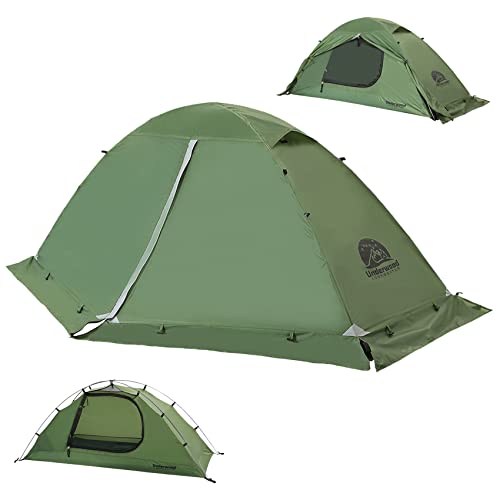
1 Person 4 Season Backpacking Tent, Lightweight Waterproof Winter Tent | One Person Tent, Cold Weather Tent, PU5000, Easy Setup, Windproof, Camping Hiking for Single Man by Underwood Aggregator
As an Amazon Associate we earn from qualifying purchases. Product prices and availability are accurate as of the date/time indicated.

Forceatt Tent for 2 Person is Waterproof and Windproof, Camping Tent for 3 to 4 Seasons,Lightweight Aluminum Pole Backpacking Tent Can be Set Up Quickly,Great for Hiking…
As an Amazon Associate we earn from qualifying purchases. Product prices and availability are accurate as of the date/time indicated.
Prices shown are approximate and for reference only. Prices change often, so please check the current price on Amazon before you buy.
Best Backpacking Tent for Beginners Low Budget in 2026: Detailed Reviews
1. Kelty Late Start 2 — Best Overall Backpacking Tent for Beginners Low Budget
The Late Start 2 is Kelty’s entry-level backpacking tent, and it is designed for beginners. The poles are colour-coded, the clips are large and easy to use with cold hands, and the tent pitches in about five minutes once you have done it once. The rainfly is full coverage, which matters in a storm, because a tent without a full rainfly will leak in wind-driven rain.
At 4.6 pounds, it is light enough for a weekend trip, and it splits well between two people — one carries the tent body and fly, the other carries the poles and stakes. The floor is 31 square feet, which fits two 20-inch pads with a little room to spare, and the peak height is 43 inches, which is enough to sit up. There are two doors and two vestibules, so each person has their own entry and a place to store boots and a pack out of the rain.
The Late Start 2 is not an ultralight tent, and it is not the best tent for winter. It is a three-season tent, for spring, summer, and autumn, in moderate wind and rain. For a beginner who wants a tent that is easy to pitch, roomy enough for two, and under $250, it is the best choice here.
2. REI Co-op Passage 2 — Best Backpacking Tent for Beginners Who Shop at REI
The Passage 2 is REI’s entry-level backpacking tent, at $200 to $250. It is 5.2 pounds, which is heavier than the Late Start 2, but it is also roomier in practice, with a 31.8 square foot floor and vertical walls that make the interior feel larger than the floor area suggests. The peak height is 43 inches, and there are two doors and two vestibules.
The Passage 2 is a good choice if you shop at REI and you want a tent you can return easily if it does not work for you, or if you want to try it in a store before you buy it. The tent is well made, with a full rainfly and a footprint available separately. The footprint should be slightly smaller than the tent floor, so water does not pool under the tent. The main drawback is weight: at 5.2 pounds, it is the second-heaviest tent here, and it is not the best choice if you plan to carry it solo for long distances. For two people splitting the weight, it is fine.
Check stock before you buy, as REI sometimes changes its tent line and the Passage 2 has been listed as low stock in some sizes. If it is not available, the Late Start 2 is a close alternative at a lower price.
3. Marmot Tungsten 2P — Best Backpacking Tent for Beginners Who Want More Room
The Tungsten 2P is Marmot’s best-selling backpacking tent, at $200 to $250. It is 4.9 pounds, with a 32.5 square foot floor — the largest floor here — and a 42 inch peak height. The extra floor area makes a difference for two people with wider pads, or for a couple who wants room for gear inside the tent.
The Tungsten has two doors, two vestibules, and a full rainfly. The poles are colour-coded, and the tent pitches quickly. The fabric is durable, and the tent has held up well in rain and wind in long-term use. The trade-off is price: at $200 to $250, it is at the top of the low-budget range, and it is not as light as the Naturehike Mongar 2 or the 3F UL Lanshan 2. For a beginner who prioritises room over weight, it is the best choice.
4. Decathlon Quechua MH500 2P — Best Budget Backpacking Tent for Beginners in Europe and the US
Decathlon’s Quechua MH500 2P is a 2-person backpacking tent at $150 to $180, which is the second-cheapest tent here after the Lanshan 2. It is 5.7 pounds, which is the heaviest tent here, but still under 6 pounds, with a 32 square foot floor and a 43 inch peak height. It has two doors, a full rainfly, and a simple pitch.
The MH500 is a good choice if you are on a tight budget and you want a tent from a large retailer with a good return policy. The weight is the main drawback: at 5.7 pounds, it is noticeably heavier than the Late Start 2 or the Mongar 2, and it will feel heavy on a long climb. For a short weekend trip, or for a trip where you split the weight, it is acceptable. For a multi-day trip with long miles, a lighter tent is worth the extra cost.
5. Naturehike Mongar 2 — Best Lightweight Backpacking Tent for Beginners Low Budget
Naturehike’s Mongar 2 is a 2-person tent at $150 to $200, weighing 4.4 pounds, with a 32 square foot floor and a 41 inch peak height. It is lighter than the Late Start 2, the Passage 2, and the Tungsten 2P, and it is cheaper than all three. The tent is a double-wall design, with an inner mesh tent and an outer rainfly, which helps with condensation.
The Mongar 2 is popular with beginners who have done some research and want a lighter tent without paying $400 for a premium brand. The poles are aluminium, the fabric is silicone-coated nylon, and the tent pitches with a simple hubbed pole system. The main drawback is support: Naturehike is a Chinese brand with less retail presence in the US than REI, Kelty, or Marmot, so you may need to order online and you may have less help if something breaks. For a beginner who is comfortable buying online, it is a good value.
6. 3F UL Gear Lanshan 2 — Best Ultralight Backpacking Tent for Beginners Low Budget
The Lanshan 2 is a trekking-pole tent, which means it uses your trekking poles as tent poles instead of including its own poles. That is why it weighs only 2.7 pounds, by far the lightest tent here, and why it costs only $120 to $150. It has a 30.5 square foot floor and a 47 inch peak height, which is the tallest peak here.
The Lanshan 2 is the best choice if you already use trekking poles and you want the lightest possible tent for under $150. It is also the hardest tent here to pitch for a beginner, because it requires setting the trekking poles to the right height, staking the tent correctly, and tensioning the fabric. It is a single-wall tent in its basic form, so condensation can be an issue, and it has one door rather than two. For a beginner who is willing to learn, it is a remarkable value. For a beginner who wants a simple, freestanding tent that pitches in five minutes, the Late Start 2 is a better first tent.
Best Backpacking Tent for Beginners Low Budget Buying Guide
A beginner backpacking tent should be easy to pitch, light enough to carry, roomy enough to sleep in, and waterproof enough for a storm. The guide below covers the four decisions that matter most: size, weight, rainfly, and sleeping gear.
Size, Peak Height, and Floor Area: Fitting Two People and Their Gear
For two people, a tent should have at least 30 square feet of floor area and a peak height of at least 40 inches. All six tents here meet that, with floors from 30.5 to 32.5 square feet and peaks from 41 to 47 inches. A 3-person tent is about 49 square feet, 7 by 7 feet, which fits three 20-inch pads, but three 25-inch pads will not fit. For a couple, a 2-person tent is enough. For a family, a 4-person tent should have at least 60 square feet, and a 6-person tent should have at least 80 square feet, with a peak of at least 72 inches to stand up.
Two doors and two vestibules are worth paying for in a 2-person tent. With one door, one person has to climb over the other to get out at night. With two doors, each person has their own entry, and each vestibule gives a place to store boots and a pack out of the rain. All six tents here have two doors except the Lanshan 2, which has one door, which is a trade-off for its light weight.
Weight, Rainfly, and Pitching: Carrying a Tent and Staying Dry
Weight under 6 pounds for a 2-person tent is a good beginner target. Under 5 pounds is better, and under 3 pounds is ultralight. The Lanshan 2, at 2.7 pounds, is ultralight, but it is not freestanding. The Mongar 2, at 4.4 pounds, is the lightest freestanding tent here. The Late Start 2, at 4.6 pounds, is a good middle ground.
A full rainfly is essential for storms. A tent with a partial fly will leak in wind-driven rain. All six tents here have a full rainfly. Check that the fly reaches close to the ground, and that the tent has guy lines for wind. Guy lines should be 3mm for moderate wind and 4mm for strong wind, reflective so you do not trip on them at night, staked at 45 degrees away from the tent, 2 to 3 feet out.
Practice pitching the tent at home before your first trip. Pitch it in your backyard, in daylight, and then in the dark with a headlamp. A tent that takes 20 minutes to pitch at home will take 30 minutes in the dark in the rain. A tent that pitches in five minutes at home will pitch in 10 minutes in the field.
Sleeping Pad, Sleeping Bag, and Footprint: Sleeping Warm in a Budget Tent
A sleeping pad should have an R-value of at least 4 for three-season use, and at least 5 for very cold weather. A side sleeper should use a pad at least 3 inches thick and at least 25 inches wide. A back sleeper should use a pad at least 2 inches thick and at least 20 inches wide. A pad with a low R-value will be cold, even in a good tent.
A sleeping bag should be rated to at least 20 degrees Fahrenheit for winter, and at least 40 degrees for summer. For a beginner backpacking trip in spring or autumn, a 20-degree bag is a safe choice. A 40-degree bag is enough for summer, but it will be cold on a chilly night.
A footprint should be slightly smaller than the tent floor, so water does not pool under the tent. It protects the floor from abrasion and from moisture. Some tents include a footprint, most do not. Buy one, or use a piece of Tyvek cut to size.
Dry the tent in the shade for 6 to 12 hours after a trip, store it loose, and store it at 60 to 70 degrees Fahrenheit with relative humidity of 30 to 50 percent. Mould can grow in 24 to 48 hours in a damp tent stored closed, so do not pack a wet tent away for weeks.
Best Backpacking Tent for Beginners Low Budget FAQ
What is the best backpacking tent for beginners low budget?
The best backpacking tent for beginners low budget is the Kelty Late Start 2, at $180 to $220, because it is under $250, weighs 4.6 pounds, has 31 square feet of floor area and a 43 inch peak height, and it is the easiest tent here to pitch with colour-coded poles. The REI Co-op Passage 2 is the best alternative at $200 to $250, with 31.8 square feet and a 43 inch peak. The 3F UL Gear Lanshan 2 is the best ultralight budget alternative at $120 to $150, weighing 2.7 pounds, but it uses trekking poles and has only one door.
How much should a beginner spend on a backpacking tent?
A beginner should spend $120 to $250 on a backpacking tent. That range buys a real backpacking tent that is under 6 pounds, with at least 30 square feet for two people and a peak of at least 40 inches, with a full rainfly. Below $120, tents are often car camping tents that are too heavy to carry. Above $250, tents are lighter and more durable, but a beginner does not need to spend $400 to start backpacking.
How light should a backpacking tent be for a beginner?
A backpacking tent for a beginner should weigh under 6 pounds for a 2-person tent. Under 5 pounds is better, and under 3 pounds is ultralight. All six tents in this guide weigh under 6 pounds, from 2.7 pounds for the 3F UL Lanshan 2 to 5.7 pounds for the Decathlon Quechua MH500 2P. Split the weight between two people if you can, with one person carrying the tent body and fly and the other carrying the poles and stakes.
What size backpacking tent should a beginner buy for two people?
A beginner should buy a 2-person tent with at least 30 square feet of floor area and a peak height of at least 40 inches for two people. That fits two 20-inch sleeping pads side by side, with a little room for gear, and it is enough height to sit up. All six tents in this guide meet that, with floors from 30.5 to 32.5 square feet and peaks from 41 to 47 inches. Choose a tent with two doors and two vestibules if you can, so each person has their own entry and a place to store boots out of the rain.
FAQ
What is the best backpacking tent for beginners low budget?
How much should a beginner spend on a backpacking tent?
How light should a backpacking tent be for a beginner?
What size backpacking tent should a beginner buy for two people?
Related guides
- How to Clean Backpacking Tent Floor in 2026: 6 How to Clean Backpacking Tent Floor Picks for Easy Cleaning, Odor Removal, and Reliable Tent Care
- Best Compact Tent for Small Apartments: 6 Best Compact Tent for Small Apartments Picks in 2026
- Best Tent for Dog Sledding Trips in 2026: How to Pick a Winter Tent That Keeps You and Your Dogs Safe in Snow and Wind
- How to Fix Tent With Stuck Zipper in 2026: A Complete Guide to Fixing a Stuck Tent Zipper, With 7 Repair Kits Compared
More from Amazon
Programs that pair well with the guide above. Offers and eligibility are set by Amazon and may change.
Free shipping on eligible items, Prime Video and more. Eligible new members can start with a free trial.
Start a Prime free trialAudiobooks and podcasts to listen to on the go. Eligible new members can start with a free trial.
Try Audible freeAd-free music streaming. Eligible new subscribers can start with a free trial.
Try Music Unlimited freeA free business account with business pricing and bulk-buying tools for work, shop or home office.
Create a business accountAs an Amazon Associate we earn from qualifying purchases.

Write Your Review
No reviews yet. Be the first to share your experience!