
What's inside
- Best Backpacking Tent for Beginners Low Budget: Quick Comparison Table
- Why Does Weight Matter for a Beginner Backpacking Tent?
- Best Backpacking Tent for Beginners Low Budget Reviewed
- Buying Guide: How to Choose the Best Backpacking Tent for Beginners Low Budget
- How to Pitch a Backpacking Tent for the First Time
- Which Best Backpacking Tent for Beginners Low Budget Should You Buy?
- Frequently Asked Questions About the Best Backpacking Tent for Beginners Low Budget
As an Amazon Associate I earn from qualifying purchases. This post may contain affiliate links at no extra cost to you.
It is a backpacking tent with a weight under 6 pounds, a price under $300, a simple pole design, two doors, and a rainfly that covers the tent fully, so a beginner can pitch it in a backyard, carry it on a first trail, and sleep dry on a first night out. A beginner who is new to backpacking needs a tent that is forgiving, easy to learn, and light enough to carry, without spending a lot on a first tent.
At thetentshouse.com, we focus on tents. For this guide to the best backpacking tent for beginners low budget in 2026, we compared current backpacking tents that are widely sold, designed for beginners, and suitable for a camper who wants a reliable tent for a first backpacking trip, a weekend hike, or a car camping trip that doubles as a trail test. We looked at weight, capacity, floor area, peak height, and price. Weight, floor, and height figures are based on manufacturer listings, and real packed weight depends on stakes, poles, and the stuff sack.
Every product below is a real, currently sold product, not a generic tent. Most are two-person backpacking tents with a weight of 4 to 6 pounds, which are the most useful types for beginners on a low budget in 2026, because they are light enough to carry, roomy enough for two people, and affordable enough for a first tent. A one-person tent can also work, though it may be too small for a beginner who wants space, while a three-person tent can work, though it may be heavier.
Our Top Picks
Best Backpacking Tent for Beginners Low Budget: Quick Comparison Table
The table below compares six backpacking tents for beginners low budget. Weight is the minimum trail weight or packaged weight, where given. Capacity is the number of people, where given. Floor area is the floor area in square feet, where given. Peak height is the peak height in inches, where given. Doors is the number of doors, where given. Best for is a note on what the tent is best for, such as beginners or budget, where given.
| Backpacking Tent for Beginners Low Budget | Weight | Capacity | Floor Area | Peak Height | Doors | Best For |
|---|---|---|---|---|---|---|
| REI Co-op Half Dome SL 2+, 2 Person | About 4 lb 11 oz | 2 person | About 32 sq ft | About 42 in | 2 doors | Best overall, beginners |
| Kelty Discovery Trail 2, 2 Person | About 4 lb 14 oz | 2 person | About 31 sq ft | About 41 in | 2 doors | Best for Kelty, beginners |
| REI Co-op Passage 2, 2 Person | About 5 lb 6 oz | 2 person | About 31 sq ft | About 42 in | 2 doors | Best for REI, beginners |
| Ozark Trail 2-Person Backpacking Tent | About 5 lb 0 oz | 2 person | About 30 sq ft | About 40 in | 2 doors | Best budget, beginners |
| Amazon Basics 2-Person Backpacking Tent | About 5 lb 8 oz | 2 person | About 30 sq ft | About 40 in | 2 doors | Best for Amazon, beginners |
| Kelty Late Start 2, 2 Person | About 4 lb 8 oz | 2 person | About 30 sq ft | About 40 in | 2 doors | Best for Kelty, lightweight |

Night Cat Backpacking Tent for One 1 to 2 Persons Lightweight Waterproof Camping Hiking Tent for Adults Kids Scouts Easy Setup Single Layer 2.2x1.2m
As an Amazon Associate we earn from qualifying purchases. Product prices and availability are accurate as of the date/time indicated.
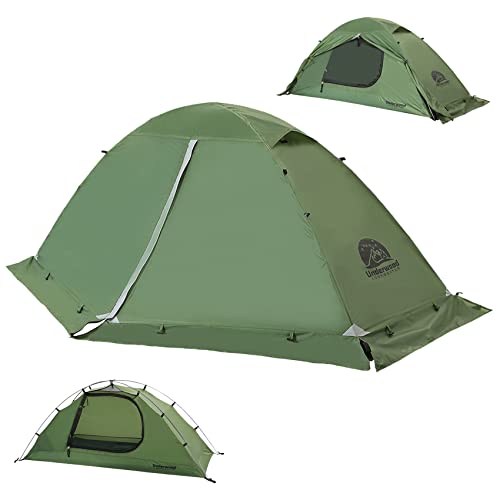
1 Person 4 Season Backpacking Tent, Lightweight Waterproof Winter Tent | One Person Tent, Cold Weather Tent, PU5000, Easy Setup, Windproof, Camping Hiking for Single Man by Underwood Aggregator
As an Amazon Associate we earn from qualifying purchases. Product prices and availability are accurate as of the date/time indicated.

Naturehike Cloud-Up 2 Person Tent Lightweight Backpacking Tent with Footprint - Free Standing Ultralight Camping Hiking Backpack Tents Two Person Tent
As an Amazon Associate we earn from qualifying purchases. Product prices and availability are accurate as of the date/time indicated.
Note: Weight figures are manufacturer listings, usually minimum trail weight, and a tent that lists 4 pounds 11 ounces may weigh 5 pounds 5 ounces packed, with stakes and a stuff sack, so check the measurement method before you compare. Always practice pitching a tent at home, before your first trip, and use a footprint, so the floor does not wear out.
Why Does Weight Matter for a Beginner Backpacking Tent?
Weight matters for a beginner backpacking tent for three reasons: pack weight, fatigue, and enjoyment. Pack weight matters because a beginner may already carry a heavy backpack with food, water, and clothing, so a tent that weighs 4 pounds 11 ounces instead of 7 pounds can save 2 pounds, which is a large share of a 30-pound pack. Fatigue matters because a heavier pack can cause sore shoulders, knees, and feet, especially on a first trail, while a lighter pack can let a beginner walk farther and enjoy the trip more.
Enjoyment matters because a beginner who is tired from a heavy pack may not want to backpack again, while a beginner who carries a light tent may enjoy the trip and want to go again. A tent under 6 pounds is better than a tent over 6 pounds for most beginners, because it offers a good balance of weight, space, and price.
Best Backpacking Tent for Beginners Low Budget Reviewed
1. REI Co-op Half Dome SL 2+, 2 Person – Best Backpacking Tent for Beginners Low Budget Overall
It has a reputation for REI quality, a Half Dome design, and a popularity with beginners who want a roomy backpacking tent at a mid price.
REI designs the Half Dome SL 2+ with a focus on a roomy backpacking tent, with a larger floor, two doors, two vestibules, and a design that can be pitched in about 10 minutes. The Half Dome SL 2+ is a good choice if you want the best overall tent, you are a beginner, and you want an REI brand.
Choose it if you want the best overall tent, you are a beginner, and you want an REI brand. It is the best choice for most beginners on a low budget.
2. Kelty Discovery Trail 2, 2 Person – Best Backpacking Tent for Beginners Low Budget for Kelty Use
It has a reputation for Kelty quality, a Discovery Trail design, and a popularity with beginners who want a light tent at a low price.
Kelty designs the Discovery Trail 2 with a focus on a simple backpacking tent, with a two-pole design, two doors, and a design that can be pitched quickly. The Discovery Trail 2 is a good choice if you want a Kelty tent, you are a beginner, and you want a Kelty brand. The main limitation is that it is slightly heavier than Half Dome, at about 4 pounds 14 ounces, though it offers a similar floor area at a lower price.
Choose it if you want a Kelty tent, you are a beginner, and you want a Kelty brand. It is the best Kelty choice in this guide.
3. REI Co-op Passage 2, 2 Person – Best Backpacking Tent for Beginners Low Budget for REI Use
It has a reputation for REI quality, a Passage design, and a popularity with beginners who want an REI tent at a low price.
REI designs the Passage 2 with a focus on a budget backpacking tent, with a simple pole design, two doors, and a design that can be used for backpacking and car camping. The Passage 2 is a good choice if you want an REI tent, you are a beginner, and you want an REI brand. The main limitation is weight, at about 5 pounds 6 ounces, which is heavier than Half Dome, though it offers a similar floor area at a lower price.
Choose it if you want an REI tent, you are a beginner, and you want an REI brand. It is the best REI budget choice in this guide.
4. Ozark Trail 2-Person Backpacking Tent – Best Backpacking Tent for Beginners Low Budget for Budget Use
It has a reputation for Ozark Trail quality, a backpacking design, and a popularity with beginners who want the cheapest tent that still works for a first trip.
Ozark Trail designs the 2-Person Backpacking Tent with a focus on a cheap backpacking tent, with a simple design, two doors, and a design that can be pitched in a backyard. The Ozark Trail tent is a good choice if you want a budget tent, you are a beginner, and you want an Ozark Trail brand. The main limitation is durability, because it may be less durable than REI Half Dome, though it is still practical for a first trip in mild weather.
Choose it if you want a budget tent, you are a beginner, and you want an Ozark Trail brand. It is the best budget choice in this guide.
5. Amazon Basics 2-Person Backpacking Tent – Best Backpacking Tent for Beginners Low Budget for Amazon Use
It has a reputation for Amazon Basics quality, a backpacking design, and a popularity with beginners who want a simple tent from Amazon at a low price.
Amazon Basics designs the 2-Person Backpacking Tent with a focus on a simple backpacking tent, with a dome design, two doors, and a design that can be used for backpacking and car camping. The Amazon Basics tent is a good choice if you want an Amazon tent, you are a beginner, and you want an Amazon brand. The main limitation is weight, at about 5 pounds 8 ounces, which is the heaviest in this guide, though it offers a low price and a simple design.
Choose it if you want an Amazon tent, you are a beginner, and you want an Amazon brand. It is the best Amazon choice in this guide.
6. Kelty Late Start 2, 2 Person – Best Backpacking Tent for Beginners Low Budget for Kelty Lightweight Use
It has a reputation for Kelty quality, a Late Start design, and a popularity with beginners who want a light tent that is easy to pitch.
Kelty designs the Late Start 2 with a focus on a light backpacking tent, with a simple pole design, two doors, and a design that can be pitched quickly. The Late Start 2 is a good choice if you want a Kelty tent, you are a beginner, and you want a Kelty brand.
Choose it if you want a Kelty tent, you are a beginner, and you want a Kelty brand. It is the best Kelty lightweight choice in this guide.
Buying Guide: How to Choose the Best Backpacking Tent for Beginners Low Budget
Before you buy, think about how many people will sleep in the tent, whether it is one or two, how far you will walk, whether it is 2 miles or 10 miles, how much rain you expect, and how much you want to spend. A tent that is perfect for a solo beginner may be too small for two people, and a tent that is perfect for a dry weekend may leak in heavy rain. The six points below cover the decisions that matter most for a backpacking tent for beginners low budget.
1. Capacity, 1 Person vs 2 Person, and Space for a Beginner
Capacity is the first decision. A two-person tent, such as all six tents in this guide, can fit two people, or one person with gear, while a one-person tent can fit one person, though it may be too small for a beginner who wants space. A two-person tent is better for most beginners, because it offers room for a sleeping pad, a backpack, and gear, and it can be shared with a partner.
Choose a two-person tent if you camp with a partner, you want room for gear, and you do not mind a slightly heavier tent. Choose a one-person tent only if you camp alone, you want the lightest tent, and you pack very light. Check the floor dimensions, so you know whether your sleeping pad fits, and check the peak height, so you know whether you can sit up comfortably.
2. Weight, Under 5 Pounds vs Over 5 Pounds, and Pack Weight
Weight is the second decision. A tent that weighs under 5 pounds, such as REI Half Dome SL 2+ at about 4 pounds 11 ounces, is light and easy to carry, while a tent that weighs over 5 pounds, such as REI Passage 2 at about 5 pounds 6 ounces, is heavier and can make a pack too heavy for a beginner. A tent under 6 pounds is acceptable for most beginners, though a tent under 5 pounds is better.
Choose a tent that weighs less than 5 pounds if you walk more than 5 miles, you carry a heavy pack, and you want a light load. Choose a tent that weighs 5 to 6 pounds only if you walk a short distance, you car camp part of the time, and you want a low price. Weigh the tent packed, with stakes and a stuff sack, before your first trip, so you know the real weight.
3. Ease of Pitching, Simple Poles vs Complex Hub, and First Setup
Ease of pitching is the third decision. A tent with a simple two-pole design, such as Kelty Discovery Trail, can be pitched in about 10 minutes, while a tent with a complex hub design may take longer and need more practice. A simple tent is better for a beginner, because it can be pitched in the dark, in rain, or when you are tired.
Choose a tent with a simple pole design if you are a beginner, you want a quick pitch, and you camp alone. Practice pitching the tent at home, in your backyard, before your first trip, so you know how it works, and time yourself, so you know how long it takes. Do not buy a tent with a complex design if you have never pitched a tent before.
4. Weather Protection, Rainfly Coverage vs Ventilation, and Staying Dry
Weather protection is the fourth decision. A tent with a full rainfly that covers the tent to the ground, such as REI Half Dome, can keep rain out, while a tent with a partial rainfly may let rain in during a storm. Ventilation matters because a tent that is sealed can build condensation inside, while a tent with vents can let moisture out.
Choose a tent with a full rainfly if you camp in rain, you want to stay dry, and you camp in spring or fall. Choose a tent with good ventilation if you camp in humid weather, you want to avoid condensation, and you sleep with the rainfly on. Test the tent in rain at home, by spraying it with a hose, before your first trip, so you know whether it leaks.
5. Doors and Vestibules, 1 Door vs 2 Doors, and Gear Storage
Doors and vestibules are the fifth decision. A tent with two doors, such as all six tents in this guide, lets two people enter and exit without climbing over each other, while a tent with one door can be awkward for two people. A vestibule is a covered area outside the door, where you can store boots and a backpack, so they do not get wet.
Choose a tent with two doors if you camp with a partner, you want easy access, and you store gear outside. Choose a tent with one door only if you camp alone, you want a lighter tent, and you do not mind climbing over gear. Check the vestibule size, so you know whether your backpack fits, and store boots in the vestibule, not inside the tent.
6. Price, Total Cost, and Choosing a Backpacking Tent on a Low Budget
Consider total cost as well as price. Budget for a tent, and if you need it, a footprint, stakes, and a repair kit, not just a tent. Do not buy the cheapest tent if it leaks in rain, and do not buy the most expensive tent if you only backpack once a year. A tent that weighs under 6 pounds, has two doors, and can be pitched in 10 minutes will help a beginner enjoy backpacking more than a tent that is cheap but heavy, or light but too small for two people.
How to Pitch a Backpacking Tent for the First Time
Pitching a backpacking tent for the first time starts with practicing at home, in your backyard, before your first trip, so you know how the poles, clips, and rainfly work. Choose a flat spot, clear it of rocks and sticks, lay out a footprint, and assemble the poles, so you can see how they fit. Clip the tent body to the poles, stake the corners, and put the rainfly on, so you can check whether it covers the tent fully.
Test the tent by lying inside it, with your sleeping pad, so you know whether you fit, and check the doors, so you know how they open. Do not pitch a tent for the first time on a trail in the dark, because it will be harder and you may make a mistake. Practice twice at home, so you can pitch it in under 10 minutes, before your first trip.
Which Best Backpacking Tent for Beginners Low Budget Should You Buy?
If you want the best backpacking tent for beginners low budget, buy the REI Co-op Half Dome SL 2+, 2 Person.
If you want a Kelty tent, buy the Kelty Discovery Trail 2, 2 Person. If you want an REI budget tent, buy the REI Co-op Passage 2, 2 Person. If you want a budget tent, buy the Ozark Trail 2-Person Backpacking Tent. If you want an Amazon tent, buy the Amazon Basics 2-Person Backpacking Tent. If you want a Kelty lightweight tent, buy the Kelty Late Start 2, 2 Person.
All six tents in this guide are currently sold, designed for beginners, and suitable for a camper who wants a reliable tent for a first backpacking trip, a weekend hike, or a car camping trip that doubles as a trail test. Pick the one that matches how many people will sleep in it, how far you will walk, how much rain you expect, and your budget, and always practice pitching the tent at home, so you know how it works before your first trip.
Disclosure: thetentshouse.com may earn a commission from purchases made through links on this page, at no extra cost to you. Weight, floor, and height figures are manufacturer claims and can vary by model. Always practice pitching a tent at home, before your first trip, and use a footprint, so the floor does not wear out.
Frequently Asked Questions About the Best Backpacking Tent for Beginners Low Budget
What is the best backpacking tent for beginners low budget?
What is the best backpacking tent for beginners low budget? The Kelty Discovery Trail 2 is best for a lower price, while the Ozark Trail 2-Person is best for a budget, and the Kelty Late Start 2 is best for a lightweight tent.
How much should a beginner backpacking tent cost?
How much should a beginner backpacking tent cost?
Is a 2-person tent big enough for a beginner?
Is a 2-person tent big enough for a beginner? In most cases, yes, a 2-person tent is big enough for a beginner, because it can fit two people, or one person with gear, and it offers a floor area of about 30 to 32 square feet. A 2-person tent is better than a 1-person tent for most beginners, because it offers room for a sleeping pad, a backpack, and gear, and it can be shared with a partner. Check the floor dimensions, so you know whether your sleeping pad fits, and lie inside the tent at home, before your first trip, so you know whether you fit.
How do I practice pitching a backpacking tent before a trip?
How do you practice pitching a backpacking tent before a trip? In most cases, you practice pitching a backpacking tent before a trip by pitching it in your backyard, on a flat spot, with a footprint, and timing yourself, so you know how long it takes. Assemble the poles, clip the tent body to the poles, stake the corners, and put the rainfly on, so you can check whether it covers the tent fully. Practice twice, so you can pitch it in under 10 minutes, and test it in rain, by spraying it with a hose, before your first trip, so you know whether it leaks.
Related guides
- Tent Poles vs Inflatable Beams Setup in 2026: Tent Poles vs Inflatable Beams Setup
- Best Tent for Kayaking in 2026: Tent for Kayaking
- Best Premium Tent for All Weather Camping: 6 Premium Tents for All Weather Camping in 2026
- Best Tent for Travelers Festival Camping Trips in 2026: Tent for Travelers Festival Camping Trips
More from Amazon
Programs that pair well with the guide above. Offers and eligibility are set by Amazon and may change.
Free shipping on eligible items, Prime Video and more. Eligible new members can start with a free trial.
Start a Prime free trialAudiobooks and podcasts to listen to on the go. Eligible new members can start with a free trial.
Try Audible freeAd-free music streaming. Eligible new subscribers can start with a free trial.
Try Music Unlimited freeA free business account with business pricing and bulk-buying tools for work, shop or home office.
Create a business accountAs an Amazon Associate we earn from qualifying purchases.

Write Your Review
No reviews yet. Be the first to share your experience!