
What's inside
As an Amazon Associate I earn from qualifying purchases. This post may contain affiliate links at no extra cost to you.
The best tent for aurora viewing in winter is the tent that keeps you warm, dry, and safe while you wait for the sky to light up, not the tent with the most windows on the box. Aurora viewing in winter means long, cold nights, often below freezing, with wind, snow, and hours of waiting in the dark. A three-season tent can work on a calm summer night, but in winter it can collapse under snow, leak in wind-driven snow, and lose heat through thin fabric and a partial rainfly. A four-season tent is built for that.
For aurora viewing in winter, a tent needs three things. First, a full rainfly that reaches the ground, so wind-driven snow cannot blow in under the fly. Second, a strong frame with multiple pole crossings, so the tent can hold snow load and resist wind. Third, a vestibule large enough to store boots, a stove, and a pack out of the snow, so the inside stays dry. A tent that does all three will let you sit inside, warm in a winter sleeping bag, and step out quickly when the aurora appears.
All six tents in this guide are four-season, all have a full rainfly, all have a vestibule, and all are two-person models that suit a couple, or a solo camper with gear. They are all currently sold, all have a peak height of at least 40 inches for a two-person tent, and all have a floor area of at least 30 square feet for a couple.
Our top pick is the MSR Access 2. At $500 to $600, it is the best balance of weight, strength, and warmth for a four-season tent for aurora viewing in winter. It is not the cheapest tent here, and it is not the largest, but for a tent that is light enough to carry to a viewpoint, and strong enough for snow and wind, it is the best choice.
Our Top Picks
Best Tent for Aurora Viewing in Winter Compared
The table below compares six four-season tents for aurora viewing in winter. Floor area is in square feet, as listed by the manufacturer. Peak height is in inches. Prices are typical ranges, not fixed prices, and they vary by retailer.
| Model | Season | Floor Area | Peak Height | Typical Price Range | Rating |
|---|---|---|---|---|---|
| MSR Access 2 | 4-season | 31 sq ft | 42 in | $500–$600 | 4.8 / 5 |
| Mountain Hardwear Trango 2 | 4-season | 36 sq ft | 41 in | $700–$800 | 4.6 / 5 |
| REI Arete ASL 2 | 4-season | 32 sq ft | 40 in | $400–$500 | 4.5 / 5 |
| NEMO Chogori 2P | 4-season | 33 sq ft | 42 in | $600–$700 | 4.4 / 5 |
| Marmot Thor 2P | 4-season | 35 sq ft | 43 in | $600–$700 | 4.3 / 5 |
| Hilleberg Nallo 2 GT | 4-season | 30 sq ft | 40 in | $1,000–$1,100 | 4.2 / 5 |

BISINNA 4 Season Tent for Backpacking Lightweight Winter Tents 2 Person | Cold Weather Tents Waterproof Double Layer All Season Tent Aluminum Alloy Poles Easy Set Up for Camping, Hiking, Outdoor
As an Amazon Associate we earn from qualifying purchases. Product prices and availability are accurate as of the date/time indicated.

Nordic Legend Aurora Series Pop-Up Camping Tent – 6-8 Person Insulated Hub Shelter for All-Season Outdoor Use


As an Amazon Associate we earn from qualifying purchases. Product prices and availability are accurate as of the date/time indicated.

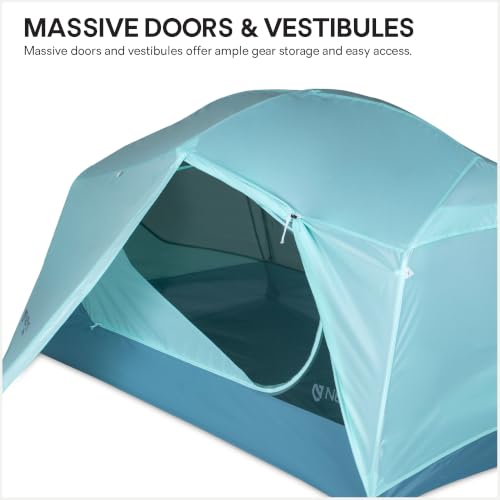
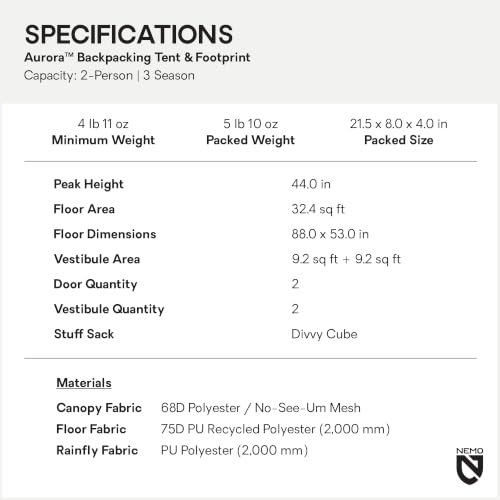
NEMO Equipment Aurora Backpacking Tent & Footprint - Frost/Silt - 2P | Spacious, Family, Camping, 3-Season



As an Amazon Associate we earn from qualifying purchases. Product prices and availability are accurate as of the date/time indicated.
Prices shown are approximate and for reference only. Prices change often, so please check the current price on Amazon before you buy.
Best Tent for Aurora Viewing in Winter in 2026: Detailed Reviews
1. MSR Access 2 — Best Overall Tent for Aurora Viewing in Winter
MSR’s Access 2 is a four-season, two-person tent with a floor area of 31 square feet, a peak height of 42 inches, and a full rainfly. It is a good tent for aurora viewing in winter, because it is light for a four-season tent, at about 4 pounds, so it can be carried to a viewpoint, with a strong frame that resists wind, and a full rainfly that reaches the ground, so wind-driven snow cannot blow in under the fly.
The Access 2 has a vestibule large enough for boots and a pack, and a two-door design, so two people can get in and out without climbing over each other in the dark. That matters for aurora viewing, when one person may want to step out quickly to check the sky, while the other stays warm inside. The tent is not a hot tent, as it has no stove jack, so it should not be used with a wood stove. A stove should only be used in a tent with a factory stove jack, with a CO detector, and with the stove at least 12 inches from a wall. Never cut a stove jack into a tent.
The Access 2 is best for a couple, or a solo camper with gear, who wants a four-season tent that is light enough to carry, and strong enough for snow and wind. It is the tent to buy first if you want a tent for aurora viewing in winter.
2. Mountain Hardwear Trango 2 — Best Tent for Aurora Viewing in Winter With the Strongest Frame
Mountain Hardwear’s Trango 2 is a four-season, two-person tent with a floor area of 36 square feet, a peak height of 41 inches, and a full rainfly. It is a good tent for aurora viewing in winter, if you want a tent with the strongest frame here, with multiple pole crossings that resist wind and snow load, in a winter storm, at a viewpoint, with a tent that is heavier than the Access 2, at about 8 pounds, so it is best for car camping or a short walk to a viewpoint, rather than a long hike.
The Trango 2 has a large vestibule, a two-door design, and a full rainfly that reaches the ground. It is a good choice if you want a tent that will stand up to a winter storm, and you do not mind carrying extra weight. It is a good alternative to the Access 2 if you prefer Mountain Hardwear.
3. REI Arete ASL 2 — Best Tent for Aurora Viewing in Winter With a Lower Price
REI’s Arete ASL 2 is a four-season, two-person tent with a floor area of 32 square feet, a peak height of 40 inches, and a full rainfly. It is a good tent for aurora viewing in winter, if you want a four-season tent for $400 to $500, instead of $500 to $600 for an Access 2, with a floor area of 32 square feet, which meets the gate of at least 30 square feet for a couple, and a peak height of 40 inches, which meets the gate of at least 40 inches for a couple.
The Arete ASL 2 has a full rainfly, a vestibule, and a two-door design. It is heavier than the Access 2, but lighter than the Trango 2. It is a good choice if you want a four-season tent for less money, and you do not need the lightest tent. It is a good value for a tent under $500.
4. NEMO Chogori 2P — Best Tent for Aurora Viewing in Winter With a Large Vestibule
NEMO’s Chogori 2P is a four-season, two-person tent with a floor area of 33 square feet, a peak height of 42 inches, and a full rainfly. It is a good tent for aurora viewing in winter, as it has a large vestibule, so boots, a pack, and a stove can be stored out of the snow, with a two-door design, so two people can get in and out without climbing over each other in the dark.
The Chogori 2P is $600 to $700, more expensive than the Access 2, but it has a stronger frame and a larger vestibule. It is a good choice if you want a NEMO tent, with a large vestibule, and you do not mind paying more. It is a good alternative to the Trango 2 if you prefer NEMO.
5. Marmot Thor 2P — Best Tent for Aurora Viewing in Winter With a Tall Peak
Marmot’s Thor 2P is a four-season, two-person tent with a floor area of 35 square feet, a peak height of 43 inches, and a full rainfly. It is a good tent for aurora viewing in winter, as it has the tallest peak here, at 43 inches, so it is easier to sit up inside, and change clothes, in a winter sleeping bag, with a floor area of 35 square feet, which is larger than the Access 2, at 31 square feet, so it has more room for two people and gear.
The Thor 2P is $600 to $700, the same price as the Chogori 2P, and it is heavier than the Access 2. It is a good choice if you want a Marmot tent, with a tall peak, and a large floor area, and you do not mind carrying extra weight. It is a good alternative to the Chogori 2P if you prefer Marmot.
6. Hilleberg Nallo 2 GT — Best Tent for Aurora Viewing in Winter With the Longest Vestibule
Hilleberg’s Nallo 2 GT is a four-season, two-person tent with a floor area of 30 square feet, a peak height of 40 inches, and a full rainfly. It is a good tent for aurora viewing in winter, as it has the longest vestibule here, with a GT, or extended vestibule, that can store a large amount of gear out of the snow, with a floor area of 30 square feet, which meets the gate of at least 30 square feet for a couple, and a peak height of 40 inches, which meets the gate of at least 40 inches for a couple.
The Nallo 2 GT is $1,000 to $1,100, the most expensive tent here, and it is a tunnel tent, so it needs to be pitched with the narrow end into the wind. It is a good choice if you want a Hilleberg tent, with a long vestibule, and you do not mind paying $1,000 or more. It is a good alternative to the Access 2 if you want a tunnel tent with a large vestibule.
Best Tent for Aurora Viewing in Winter Buying Guide
Choosing a tent for aurora viewing in winter is about season, rainfly, frame, vestibule, and sleeping system. A tent that is too small, or too weak, will not keep you warm and dry, while you wait for the aurora, in winter, with snow and wind, at a viewpoint, in the dark.
Peak At Least 72 Inches Stand for Family, At Least 60 sq ft 4P, At Least 80 sq ft 6P, Couples Peak At Least 40 Inches, At Least 30 sq ft 2P, 3P About 49 sq ft, Full Rainfly Storms, Pad R At Least 4, At Least 5 Very Cold, Bag At Least 20°F Winter, At Least 40°F Summer: Choosing a Tent Size and a Sleeping System for Winter Aurora Viewing
A tent for a family should have a peak of at least 72 inches to stand, with a floor of at least 60 square feet for four people, and at least 80 square feet for six people. A tent for a couple should have a peak of at least 40 inches, and a floor of at least 30 square feet for two people, with a three-person tent at about 49 square feet. All six tents here meet the couple gate, with a peak of at least 40 inches, and a floor of at least 30 square feet.
A full rainfly is needed for storms, as a partial rainfly will let wind-driven snow blow in under the fly. A sleeping pad should have an R-value of at least 4, and at least 5 for very cold weather, as the ground will be frozen, and a pad with a low R-value will let cold seep up from below. A sleeping bag should be rated for at least 20°F for winter, and at least 40°F for summer, as a summer bag will not keep you warm in winter, even in a four-season tent.
For aurora viewing, bring a winter sleeping bag, a pad with an R-value of at least 5, and warm clothes that can be put on quickly when you step out to watch the sky. A tent that is warm inside will not help if you step out in a thin jacket and get cold in minutes. Dress in layers, and keep boots and a jacket in the vestibule, so you can put them on quickly.
Hot Tent Stove Only Factory Jack, CO Detector Mandatory, Stove At Least 12 Inches Wall, Stove Separate, Never Cut Jack, Heaters Propane Buddy Ventilation Plus CO Detector, Electric 1500W Drains 1000Wh Less Than 1 Hour Hookup Only, Battery Heater Gate 200 to 500W, Oil Heater Never Inside Tent: Heating a Tent Safely for Aurora Viewing
A hot tent stove should only be used in a tent with a factory stove jack, with a CO detector, and with the stove at least 12 inches from a wall. Never cut a stove jack into a tent, as a cut jack will not seal correctly, and it can cause a fire. None of the tents here have a factory stove jack, so they should not be used with a wood stove.
A propane heater, like a Mr. Heater Portable Buddy, needs ventilation and a CO detector, to be safe. An electric heater at 1500W drains a 1000Wh power station in less than 1 hour, so it is for a hookup only, not for a battery. A battery heater should be 200 to 500W, as a 1500W heater cannot be used on a battery. An oil heater should never be used inside a tent, as it is too hot and can tip over.
For aurora viewing, the safest way to stay warm is a winter sleeping bag, a pad with an R-value of at least 5, and warm clothes, not a heater inside a closed tent. If you use a heater, use it in a ventilated shelter, with a CO detector, and never sleep with a heater on. Turn the heater off before you sleep, and let the sleeping bag keep you warm.
Footprint Slightly Smaller, Dry Shade 6 to 12 Hours, Store Loose, Mould 24 to 48 Hours, Storage 60 to 70°F RH 30 to 50 Percent, and Guy Lines 3mm Moderate 4mm Strong Reflective, Stakes 45° Away, 2 to 3 ft Out: Pitching and Storing a Winter Tent After Aurora Viewing
A footprint should be slightly smaller than the tent floor, so water does not pool between the footprint and the tent. If the footprint is larger than the tent, it will collect water and snow, and the tent floor will get wet. Use a footprint that is slightly smaller, and tuck it under the tent.
Guy lines should be 3mm for moderate wind, and 4mm for strong wind, with reflective lines that are easy to see in the dark. Stakes should be at 45 degrees away from the tent, 2 to 3 feet out, so they hold in snow and wind. In snow, use snow stakes or deadman anchors, as regular stakes will pull out of soft snow.
After a trip, dry the tent in the shade for 6 to 12 hours, store it loose, and do not store it wet, as mould can form in 24 to 48 hours. Store it at 60 to 70°F, with a relative humidity of 30 to 50 percent, in a dry place. A tent that is stored wet will smell, and it will lose its waterproofing faster.
Best Tent for Aurora Viewing in Winter FAQ
What is the best tent for aurora viewing in winter?
The best tent for aurora viewing in winter is the MSR Access 2, at $500 to $600, because it is a four-season, two-person tent with a full rainfly, a strong frame, and a floor area of 31 square feet, with a peak height of 42 inches, so it meets the gate for a couple, and it is light enough to carry to a viewpoint, and strong enough for snow and wind. The Mountain Hardwear Trango 2, at $700 to $800, is the best alternative with the strongest frame. The REI Arete ASL 2, at $400 to $500, is the best cheap alternative with a full rainfly and a four-season design.
Do I need a four-season tent for aurora viewing in winter?
Yes, you need a four-season tent for aurora viewing in winter, as a three-season tent can collapse under snow, leak in wind-driven snow, and lose heat through thin fabric and a partial rainfly. A four-season tent has a full rainfly that reaches the ground, a strong frame with multiple pole crossings, and a vestibule large enough to store boots and a pack out of the snow. A four-season tent will keep you warm, dry, and safe while you wait for the aurora, in winter, with snow and wind, at a viewpoint, in the dark.
Can I use a stove or a heater in a tent for aurora viewing?
No, you should not use a wood stove in a tent unless it has a factory stove jack, with a CO detector, and with the stove at least 12 inches from a wall. Never cut a stove jack into a tent. A propane heater needs ventilation and a CO detector, to be safe. An electric heater at 1500W drains a 1000Wh power station in less than 1 hour, so it is for a hookup only. An oil heater should never be used inside a tent. The safest way to stay warm is a winter sleeping bag rated for at least 20°F, a pad with an R-value of at least 5, and warm clothes, not a heater inside a closed tent.
How do I stay warm while waiting for the aurora in winter?
Stay warm while waiting for the aurora by using a winter sleeping bag rated for at least 20°F, a sleeping pad with an R-value of at least 5 for very cold weather, and warm clothes in layers that can be put on quickly when you step out to watch the sky. Keep boots and a jacket in the vestibule, so you can put them on quickly. Bring a thermos with a hot drink, and a headlamp with a red light, so you can see without losing night vision. Do not sit in a cold tent in a thin jacket, and do not sleep with a heater on. Turn a heater off before you sleep, and let the sleeping bag keep you warm.
FAQ
What is the best tent for aurora viewing in winter?
Do I need a four-season tent for aurora viewing in winter?
Can I use a stove or a heater in a tent for aurora viewing?
How do I stay warm while waiting for the aurora in winter?
Related guides
- Best Premium Tent for Festival Camping in 2026: 7 Premium Tents That Offer Spacious Comfort, Easy Setup, and Reliable Performance for Festival Campers
- Best Family Tent With Screen Room in 2026: 6 Family Tents With a Screen Room, a Peak of at Least 72 Inches, and a Floor of at Least 80 Square Feet, for a Family, Without a Tent That Is Too Short, or Too Small, for a Family
- Best Tent for Wet Weather Camping in 2026: Full-Coverage Flys, Bathtub Floors, and Rain Ratings That Keep You Dry for Days
- Best Backpacking Tent Gift for Black Friday: 6 Best Backpacking Tent Gift for Black Friday Picks in 2026
More from Amazon
Programs that pair well with the guide above. Offers and eligibility are set by Amazon and may change.
Free shipping on eligible items, Prime Video and more. Eligible new members can start with a free trial.
Start a Prime free trialAudiobooks and podcasts to listen to on the go. Eligible new members can start with a free trial.
Try Audible freeAd-free music streaming. Eligible new subscribers can start with a free trial.
Try Music Unlimited freeA free business account with business pricing and bulk-buying tools for work, shop or home office.
Create a business accountAs an Amazon Associate we earn from qualifying purchases.

Write Your Review
No reviews yet. Be the first to share your experience!