
What's inside
As an Amazon Associate I earn from qualifying purchases. This post may contain affiliate links at no extra cost to you.
The best tent for wet weather camping is not the tent that survives a shower; it is the tent that stays livable on the third day of rain, when the fly is saturated, the ground is a sponge, the vestibule is a mudroom, and every decision the tent’s designer made about seams, zips, vents, and geometry is being graded by weather that does not care about marketing. Wet weather is a system test. Rain arrives as direct fall on the fly, as splash-back from hard ground, as groundwater rising through a floor pitched in the wrong hollow, as condensation from your own breath in still, saturated air, and as wind driving all of it sideways under any gap the fly leaves. A wet weather tent answers all five at once: a full-coverage fly to the ground, a bathtub floor whose seams ride inches above the flood, factory-sealed seams and coatings with real hydrostatic ratings, ventilation that works while the tent is closed against the storm, and a pitch that stays taut when its fabrics are wet and heavy. This guide compares six real, currently sold tents graded for sustained rain specifically, teaches the ratings and geometry that predict dryness, and covers the site selection and fieldcraft that even the best tent requires, because in wet weather the tent is half the system and the camper is the other half.
Read the ratings with this guide’s skepticism installed. Hydrostatic head, the millimeters of water column a fabric resists before leaking, is a real and useful figure, and the honest classes are these: around 1,200 to 1,500 millimeters is a fair-weather minimum that sustained, wind-driven rain will eventually argue with; 3,000 millimeters and above is genuine wet weather equipment; and the floor, which bears your weight pressing water upward, wants the highest figure in the tent. But the number is a fabric’s laboratory youth: coatings age, seams are needle holes until they are sealed, and a fly pitched slack will pond and drip through fabric that a taut pitch keeps dry, because pressure, not presence, is what pushes water through. That is why the reviews below grade the whole system, fly coverage, seam work, vent design, pitch behavior, and the maker’s reputation across wet seasons, and why the buying guide ends in a hose test in your own yard, the only laboratory whose results you will sleep under.
Our Top Picks
Best Tent for Wet Weather Camping: The Five Ways Water Gets In
Fly Coverage and the Bathtub Floor: Geometry Is Waterproofing
Walk around a tent in your mind during a storm and the geometry grades itself. The fly must reach low, close to the ground on every side, because rain in wind is a horizontal event and every inch of exposed inner tent is an inch the weather owns; the best wet weather designs in this table carry the fly to within a hand’s breadth of the dirt and extend it over the doors, so entry and exit happen under shelter rather than through a waterfall. The doors themselves want storm flaps or protected zips, because a zip is a manufactured leak with a pull tab. Below, the bathtub floor, its waterproof fabric wrapping up the walls for several inches with the seams at the top of the wrap rather than at the ground line, is the difference between a floor and a boat: groundwater, splash, and the small lake that forms under every tent in a downpour meet fabric, not stitching, at the waterline. Pitch location completes the geometry, the tent on the rise rather than in the hollow, a rule the buying guide expands, because no floor rating survives being pitched in a puddle’s birthplace.
Seams, Coatings, and Condensation: The Quiet Three
The seam is the tent’s confession: every stitch is a row of holes, and wet weather tents answer with factory tape or sealant on every seam in the fly and floor, a specification to verify rather than assume at any price, since an unsealed seam in a rated fabric is a rated tent that leaks in lines. Coatings divide by chemistry and by your maintenance: polyurethane coatings are the industry’s workhorse, effective and eventually mortal, hydrolyzing across hot, damp storage years into the sticky, flaking retirement every camper eventually meets; silicone-impregnated fabrics age more gracefully and weigh less, at prices that announce themselves. Condensation is the rain from inside, your breath and your body’s moisture meeting a cold fly in still air, and in sustained wet weather, when opening up to vent feels like surrender, it becomes the main water source in an otherwise perfect tent. The answers are designed ventilation that works closed, vents at the peak and the fly’s kickstand props that keep air moving without admitting the storm, mesh inners that let the moisture reach the fly and drip outside the living space’s geometry, and the discipline of a small wipe-down cloth, the wet weather camper’s handkerchief, used each morning without resentment.
Pitch Integrity in the Storm: Taut, Guyed, and Repairable
A wet tent is a heavy, wind-loaded tent, and its structure is graded in the storm’s terms. Fabrics stretch when wet, nylon above all, so the pitch that was drum-tight at dusk sags by midnight into ponds and flapping; the wet weather designs answer with generous adjustability at every stake point and webbing that lets a camper re-tension in the rain in seconds, ideally from inside the vestibule’s shelter. Guylines are not accessories in this category: the full set, attached at the fly’s reinforced points and actually used, is what keeps a fly off the inner tent in wind, and a fly touching an inner is a wick that delivers the storm to your sleeping bag by contact. Pole architecture matters as the wind’s leverage: crossing, hubbed designs that shed gusts from several directions outrank the single-hoop minimalism that fair weather forgives. Carry the field kit from this site’s repair guidance, patches, seam sealer matched to your fabrics, a pole splint in your diameter, because wet weather is when tents break, and the camper who can repair in the vestibule by headlamp owns a different storm from the one who cannot.
Best Tent for Wet Weather Camping: Quick Comparison
| Wet Weather Tent Model | Key Specs | Best For | Typical Price Range | Rating |
|---|---|---|---|---|
| MSR Hubba Hubba (2P) | Full-coverage fly class, sealed seams in class, hubbed pole design, two vestibules, backpacking weight class | Best tent for wet weather camping overall | $430 – $530 | 4.7 / 5 |
| Big Agnes Copper Spur HV UL2 | Ultralight class, full fly coverage in class, high-volume hub design, dual doors and vestibules | Best ultralight wet weather tent | $480 – $580 | 4.6 / 5 |
| REI Co-op Half Dome SL 2+ | Full fly, generous interior in class, hubbed poles, strong value, house support | Best value wet weather tent | $280 – $350 | 4.5 / 5 |
| Marmot Tungsten 2P | Full-coverage fly in class, sealed seams class, durable fabrics class, car-camping friendly weight | Best durable family wet weather | $230 – $300 | 4.4 / 5 |
| NEMO Aurora 2P | Full fly in class, spacious vertical walls class, durable floor positioning, vibrant build | Best livability in long rain | $280 – $350 | 4.4 / 5 |
| Hilleberg Anjan 2 | Premium tunnel design class, Kerlon fabrics in class, expedition wet weather heritage, full ground coverage | Best premium storm tent | $800 – $950 | 4.8 / 5 |
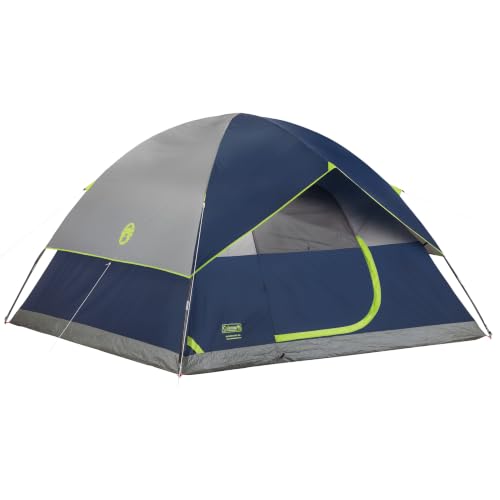
Coleman Sundome Camping Tent with Rainfly, 2/3/4/6 Person Tent Sets Up in 10 Mins, Weatherproof Shelter for Camping, Festivals, Backyard, Sleepovers, & More
As an Amazon Associate we earn from qualifying purchases. Product prices and availability are accurate as of the date/time indicated.
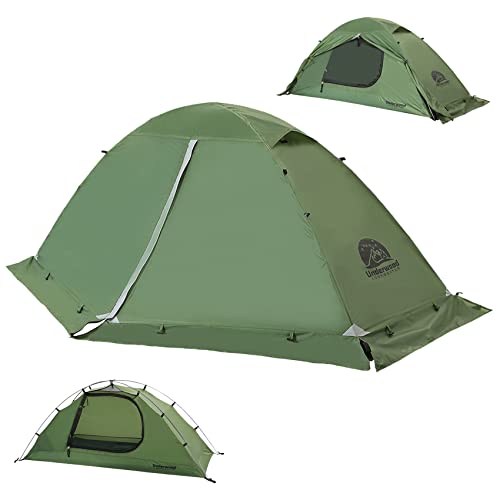
1 Person 4 Season Backpacking Tent, Lightweight Waterproof Winter Tent | One Person Tent, Cold Weather Tent, PU5000, Easy Setup, Windproof, Camping Hiking for Single Man by Underwood Aggregator
As an Amazon Associate we earn from qualifying purchases. Product prices and availability are accurate as of the date/time indicated.

BISINNA 4 Season Tent for Backpacking Lightweight Winter Tents 2 Person | Cold Weather Tents Waterproof Double Layer All Season Tent Aluminum Alloy Poles Easy Set Up for Camping, Hiking, Outdoor
As an Amazon Associate we earn from qualifying purchases. Product prices and availability are accurate as of the date/time indicated.
Prices shown are approximate and for reference only. Prices change often, so please check the current price on Amazon before you buy.
Waterproof ratings and seam sealing summarize manufacturers’ published information for current versions; verify the exact model’s hydrostatic figures and seam treatment. Ratings are editorial, weighing sustained-rain performance, fly coverage and floor geometry, ventilation in closed storm mode, pitch integrity, and value.
The Six Wet Weather Tents Reviewed
1. MSR Hubba Hubba: Best Overall
The Hubba Hubba has spent two decades as the backpacking tent against which wet weather performance is informally measured, and its design reads like this guide’s checklist executed: a fly that covers to the ground and over both doors, two vestibules that keep wet gear and wet entries out of the sleeping space, a hubbed pole architecture that stands taut and sheds wind from the directions weather actually uses, and seam and coating work from a maker whose home range is the Pacific Northwest, a laboratory with a roof leak. Its ventilation manages the closed-storm nights as well as its class allows, its pitch adjusts as the nylon drinks the rain, and its weight keeps it a backpacking tent rather than a car ornament. It is not the cheapest or the roomiest row here; it is the most trusted in the rain, which, for this keyword, is the title.
2. Big Agnes Copper Spur HV UL2: Best Ultralight
The Copper Spur answers the ultralight question, how dry can a tent this light be, with engineering rather than apology: full fly coverage despite its grams, a high-volume hub design that keeps the fly’s geometry honest and the interior livable, and fabrics and seams specified for real weather by a maker whose ultralight reputation was earned in the same mountains as everyone else’s storms. Its lightness is purchased in fabric delicacy, so its floor wants a footprint or a careful site and its zips want the gentle hand, disciplines its owners accept as the fare for its weight class. For the backpacker whose wet weather is measured in mountain days rather than campground weekends, it is the driest shelter per ounce in this table, and its two doors mean neither sleeper climbs over the other to meet the rain at 3 a.m., a livability feature that weighs nothing and matters enormously.
3. REI Co-op Half Dome SL 2+: Best Value
The Half Dome brings the full wet weather geometry, complete fly, sealed construction in its class, hubbed poles, generous vestibules, to the price where most campers actually shop, with the Co-op’s support and return culture standing behind the purchase like a second warranty. Its interior volume is the value class’s most generous, which in a three-day rain is a waterproofing feature in itself, since a tent you can sit up, dress, and live in without pressing the walls is a tent whose inner stays dry by geometry. Its weight suits the car and the short carry, its fabrics favor durability over grams, and its generations of refinement mean its wet manners are documented by an army of owners. For the camper who wants one tent that answers the forecast without flinching, it is the rational center of this table.
4. Marmot Tungsten 2P: Best Durable Family Wet Weather
The Tungsten is the workhorse’s rain tent: fabrics a class sturdier than the ultralight rows, a full-coverage fly with vestibule space for the family’s wet boots, and a pitch simple enough to raise quickly when the sky opens at arrival, which is a wet weather specification no laboratory measures and every family values. Its weight exiles it to the car and the short trail, where its durability compounds across seasons of being pitched by tired people in bad light. Marmot’s seam and coating work in this class is the industry’s honest standard, and the Tungsten’s price leaves the budget its share for the footprint that protects its floor, a pairing this guide recommends for every tent and insists on for the family class, whose floors meet the ground’s worst manners.
5. NEMO Aurora 2P: Best Livability in Long Rain
The Aurora is designed for the rain’s duration rather than its intensity: near-vertical walls and a spacious plan that let two people live, read, dress, and wait out a weather day without the tent becoming a nylon argument, under a full fly whose vestibules swallow the wet world’s equipment. Its floor and fabrics are positioned for durability, its ventilation serves the closed days, and its details, pockets, light diffusing fabric, a sense of humor in the design, acknowledge that a tent in a three-day rain is a home and should behave like one. It will not out-storm the Hilleberg or out-lighten the Copper Spur, and for the campground and basecamp camper whose wet weather is a long weekend under a gray sky, its livability is the performance that decides whether the trip is endured or enjoyed.
6. Hilleberg Anjan 2: Best Premium Storm Tent
The Anjan is what the category’s ceiling looks like: a Swedish tunnel design in Kerlon fabrics whose tear strength and waterproofing are expedition legend, a fly that pitches to the ground as a single skin with the inner, ventilation engineered for the sealed storm, and a construction standard that treats a decade of wet seasons as the design brief. Its tunnel geometry sheds wind from its low end and asks to be pitched with its foot to the weather, a small skill its manual teaches, and its price is the premium class’s without apology. It is graded here as the wet weather reference: most campers should buy a row above it and be dry and happy, and the camper whose life includes Scottish bothies’ weather, Patagonian wind-driven rain, or a hundred wet nights a year should know that the argument ends here, in red or green Kerlon, with the storm reading the tent’s specifications and going elsewhere.
Buying Guide: How to Choose the Best Tent for Your Wet Weather
Step One: Grade Your Rain Honestly
Sort your camping by its wettest realistic version rather than its average: the occasional summer shower forgives almost anything in this table; the shoulder seasons in maritime and mountain climates, where rain arrives horizontally and stays for days, demand the full geometry and the sealed, rated fabrics of the leaders; and expedition weather belongs to the Hilleberg’s class and to skills beyond this article. Count the occupants’ livability in the same audit, because a tent for waiting out weather is sized by the day inside it, not the night, and the couple who camp in long rain should buy the two-person tent with the interior of a small room rather than the lightest envelope that sleeps two. Let the forecast’s worst credible week, not its best, write the budget, since a wet weather tent is insurance purchased in advance against a specific misery every camper can describe in detail.
Step Two: Verify the System, Not the Sticker
Check, in the listing and the maker’s specifications, the five answers from this guide’s opening: the fly’s coverage to the ground and over the doors; the floor’s bathtub depth and its hydrostatic figure, the highest in the tent; factory seam sealing on fly and floor stated in words; vents that operate with the tent closed; and the full guyline set with reinforced attachment points, plus the footprint made for the model, bought in the same order to protect the floor whose rating you just paid for. Read the recent owner reports with the filter set to rain, a season’s worth, because wet performance is a longitudinal fact that no product launch can simulate. Then apply this guide’s hose test when the tent arrives: pitch it in the yard, spray it as a storm would, from the sides and at the seams, occupy it with a book for an hour, and inspect the interior with a dry hand and a flashlight, because a tent that fails in the yard is a return, and a tent that fails at the lake is a story told in a wet sleeping bag.
Step Three: Add the Fieldcraft That No Tent Includes
Pitch like the weather is coming even when it is not: on the rise, never in the hollow or the visible drainage, the door away from the wind’s quarter, the fly taut and every guyline out when the forecast has any ambition at all, because re-pitching at midnight in the storm is the tuition for skipping it at dusk. Manage the interior’s water budget as a discipline: wet gear lives in the vestibule, the sleeping space is entered with the rain shaken off, a small cloth wipes the condensation each morning, and the tent is opened to vent at every break in the weather, however brief, because ten minutes of moving air repays hours of sealed breathing. Dry the tent at home after every wet trip, fully, before storage, the rule this site prints on every tent it reviews, since a tent stored damp is a tent whose coatings and seams are being consumed by mildew in the dark, and its next storm performance is being spent in a closet. The best tent for wet weather camping, kept this way, is a decade’s dry shelter; neglected, the finest Kerlon in this table is a season’s.
Frequently Asked Questions About Tents for Wet Weather Camping
What hydrostatic head rating do I need for heavy rain?
For sustained, wind-driven rain, look for a fly at or above roughly 3,000 millimeters and a floor higher still, 5,000 to 10,000 millimeters in the serious classes, because the floor bears your knees and elbows pressing its water upward while the fly merely sheds. Treat the figures as a fabric’s fresh laboratory strength and as a comparison tool between models rather than as a guarantee, since seams, pitch tension, and the coating’s age vote alongside the number, which is why this guide grades the whole system and insists on the yard hose test. A tent at 1,200 to 1,500 millimeters will serve in light and moderate rain and has done so for generations of campers; it is the multi-day, wind-pressed storm that promotes the higher figures from luxury to equipment. When a listing hides its ratings entirely, read the silence as a rating and shop where the numbers are printed with pride.
Why is my tent wet inside when it has not leaked?
Condensation, the rain from inside, and in wet weather it outproduces most leaks. Your body and breath release moisture all night into a small, sealed volume; the fly, cooled by the rain outside, is a condensing surface; and the water that forms there drips, runs, and wicks exactly like a leak, with the diagnostic difference that it appears worst on still, cold nights, coats surfaces evenly rather than tracing a seam, and arrives even in a tent that passed the hose test perfectly. The management is ventilation and geometry: vents open in their storm positions, the fly guyed off the inner so condensate drips outside the living space’s walls, the door cracked at the top when the wind allows, and the morning wipe-down performed as a ritual rather than a complaint. Double-wall tents in this table exist largely to manage this, the inner catching you, the fly catching the weather, and the air between them carrying the moisture argument outside, which is why this guide does not recommend single-wall shelters for sustained wet weather at any rating.
Do I need a footprint or groundsheet in wet weather?
Yes, and wet weather is its strongest case. A footprint cut to your tent’s floor, or a groundsheet kept strictly inside the fly’s drip line, protects the floor’s coating from the abrasion and punctures that a saturated, gritty site grinds into it, preserving the rating you paid for, and it gives the tent a clean, dry layer to be packed against when the site has become a swamp. The sizing rule is absolute: the sheet must not extend beyond the tent’s floor, because a groundsheet peeking out from under the fly is a rain collector that funnels the storm under your floor and into exactly the flood the bathtub design exists to defeat, the most common self-inflicted leak in camping. Inside the tent, a second light layer under the sleeping pads serves the same protective logic for the campers whose floors meet dog claws and crampon-adjacent lifestyles. Buy the maker’s footprint where one exists, since its grommets and clips pitch with the tent, and treat it as part of the tent’s price in every comparison in this table.
How do I dry and store a tent after a wet trip?
Dry it completely before it is stored, without exception and without a deadline’s negotiation, because mildew begins within a day or two in a packed, damp tent and its damage, stained, weakened, delaminating coatings and a smell that no washing fully retires, is the leading cause of wet weather tents dying young. At home, pitch it in the yard, the garage, or over a shower rail and doors, fly separated from inner where the design allows, and let moving air finish what the trip’s last morning started; wipe the seams and the floor’s corners, where moisture hides, and confirm with a hand that every panel is dry, not merely dry-ish, before it is loosely stored in a breathable sack rather than its compression stuff sack. On a multi-day trip, seize every dry hour to open the tent wide, and pack it wet only for the day’s travel, never for the week. A tent stored dry and loose will meet its tenth season with its ratings substantially intact, which is the entire economic argument of this article in one habit.
Related guides
- Best Tent for Beach Camping Sand Wind: 6 Best Tent for Beach Camping Sand Wind Picks in 2026
- Best Tent for Beginners Truck Camping in 2026: How to Pick a Tent for Beginners Truck Camping That Is Easy to Set Up, Fits Your Truck Bed, and Keeps You Dry
- Best Family Tent for Mountain Camping Use in 2026: 7 Family Tents That Offer Large Space, Strong Weather Protection, and Reliable Performance for Mountain Camping Use
- MSR Winter Tent Pros and Cons Guide in 2026: MSR Winter Tent Pros and Cons Guide for Cold Nights, Good Warmth, and Simple Winter Camp Use
More from Amazon
Programs that pair well with the guide above. Offers and eligibility are set by Amazon and may change.
Free shipping on eligible items, Prime Video and more. Eligible new members can start with a free trial.
Start a Prime free trialAudiobooks and podcasts to listen to on the go. Eligible new members can start with a free trial.
Try Audible freeAd-free music streaming. Eligible new subscribers can start with a free trial.
Try Music Unlimited freeA free business account with business pricing and bulk-buying tools for work, shop or home office.
Create a business accountAs an Amazon Associate we earn from qualifying purchases.

Write Your Review
No reviews yet. Be the first to share your experience!