
What's inside
- What Makes the Best Budget Tent for Weekend Camping
- Quick Comparison: Best Budget Tents for Weekend Camping Compared
- Best Budget Tents for Weekend Camping: The Six Reviewed
- Buying Guide: How to Choose the Best Budget Tent for Weekend Camping
- How We Selected the Best Budget Tents for Weekend Camping
- Frequently Asked Questions About the Best Budget Tent for Weekend Camping
As an Amazon Associate I earn from qualifying purchases. This post may contain affiliate links at no extra cost to you.
The best budget tent for weekend camping is not the cheapest tent you can find, and it is not a mountaineering shelter on sale. Weekend camping has its own shape: you drive to the site, pitch on grass or a prepared pad, sleep two nights, and pack up on Sunday, usually in weather you chose by looking at a forecast. What you need is a tent that pitches quickly after a Friday drive, stands up to a normal weekend of rain and wind, fits the people and pads you actually bring, and survives being used ten or fifteen weekends a year. That is a specific product, and several established makers build it well for modest money.
The trap in this category is the false bargain. A very cheap tent with fibreglass poles that splinter, a fly that covers only part of the tent, and a floor that leaks at the seams will cost you a wet Sunday, a ruined mattress, and a replacement tent — more than the good budget tent cost in the first place. The second trap is the opposite: paying for ultralight fabrics and expedition ratings you will never use at a drive-in site. The sweet spot is a proven dome or cabin design from a maker with spare parts and a warranty, bought in the right size, pitched properly, and dried after every trip.
Size is where most weekend campers go wrong, so decide it before the models. Tent capacity ratings assume people sleeping shoulder to shoulder on narrow pads with no gear inside. As a rule, buy one size larger than your headcount: a couple sleeps comfortably in a rated four-person tent, and a family of four should be looking at six-person models. Measure your sleeping pads, not just the people, and check the peak height if you want to sit up, dress inside, or stand — cabin styles trade pack size for that headroom, which is a fair trade when the car does the carrying.
Our Top Picks
What Makes the Best Budget Tent for Weekend Camping
Weather Protection Is a System, Not a Label
A weekend tent earns its keep in one rainy night. Look for a rainfly that reaches low over the tent body, a bathtub-style floor that turns up at the edges, factory-sealed or taped seams on the fly and floor, and a vestibule or covered entry so rain does not fall straight into the door when you come and go. No budget tent is a four-season shelter, and none should be trusted in severe storms, heavy snow load, or exposed high wind. Pitch with the fly guyed out properly, choose a site that does not collect water, use a footprint or groundsheet sized slightly smaller than the floor so it does not channel rain underneath, and never rely on a budget tent in weather beyond its design.
Poles and Pitching Decide Your Friday Evening
Fibreglass poles are common at this price and are serviceable if treated kindly — never forced, never snapped into place — but aluminium poles are stronger for their weight and age better. More important for weekends is the pitching system: colour-coded clips, sleeves you can manage with a partner in ten minutes, and instructions you have practised once at home in daylight. The first pitch of any tent should happen in your garden or a park, not at dusk in a field. Time it, learn where every stake and guyline goes, and pack a mallet, spare stakes, and a repair sleeve in the tent bag permanently.
Ventilation Decides How You Wake Up
On a still, mild night, a budget tent’s inner walls can run with condensation from your own breathing, which campers often mistake for leaks. Mesh panels, fly vents, and a fly that can be adjusted for airflow are the cure, along with pitching so a light breeze can move through. A tent with generous mesh also transforms summer weekends, keeping insects out while letting heat escape. In cooler weather, that same mesh means a budget tent will feel colder than an expedition tent, so match your sleeping bags and pads to the season rather than expecting the tent to provide warmth it was never designed to give.
Quick Comparison: Best Budget Tents for Weekend Camping Compared
| Budget Weekend Tent Model | Best For | Key Specs |
|---|---|---|
| Coleman Sundome 4-Person | Best budget tent for weekend camping overall | Dome design, rated for 4, full-coverage fly, large windows and ground vent, fibreglass poles as published |
| Coleman Skydome 4-Person | Best for fast pitching | Dome design with pre-attached poles, rated for 4, dark-rest interior options, wide door as published |
| Kelty Late Start 4 | Best value from a backpacking brand | Dome design, rated for 4, aluminium poles, colour-coded clip setup, compact packed size as published |
| ALPS Mountaineering Lynx 4 | Best for wet weekends | Dome design, rated for 4, full-coverage fly with vestibules, aluminium poles, sealed seams as published |
| CORE 6 Person Dome Tent | Best for families needing space | Dome design, rated for 6, adjustable ventilation, gear storage features, centre height for sitting and dressing as published |
| Ozark Trail 4-Person Dome | Best rock-bottom budget starter | Dome design, rated for 4, basic fly coverage, fibreglass poles, best for fair-weather sites as published |
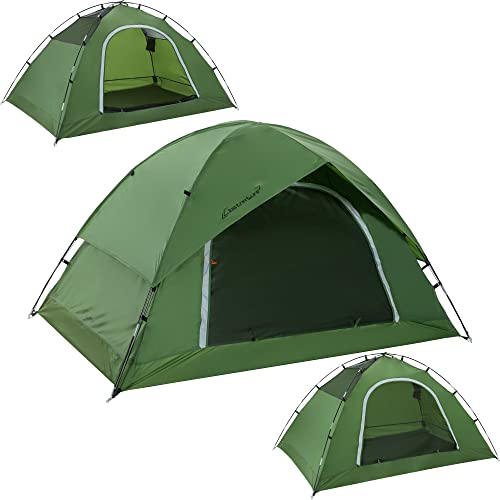
Clostnature Waterproof Camping Tent for 2 Person, Two Man Easy Set Up Tent | 190T Polyester, Lightweight, Compact, Freestanding, Great Ventilation, Small Tent for Outdoor, Kids, Scouts
As an Amazon Associate we earn from qualifying purchases. Product prices and availability are accurate as of the date/time indicated.
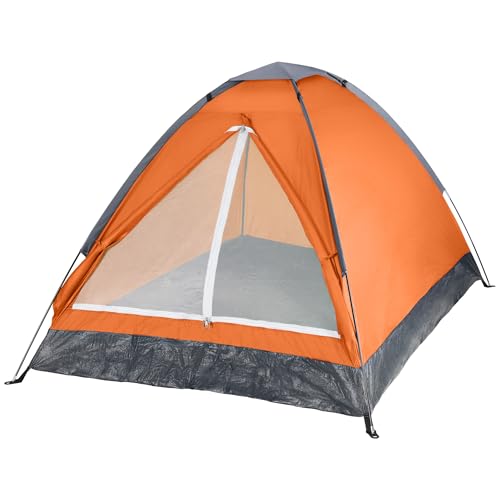
2 Person Camping Tent with Rain Fly and Carrying Bag – Lightweight Outdoor Pop Up Tents for Camping Essentials, Music Festivals, Backpacking, Hiking, or Beach Shelter by Wakeman Outdoors
As an Amazon Associate we earn from qualifying purchases. Product prices and availability are accurate as of the date/time indicated.

Golabs CT3 Instant Pop Up Tent for Camping, 2 Person Easy Setup Tent, Khaki | 1-Minute Setup Pre-Attached Pole, 4-Side Mesh Ventilation, Lightweight 4.8 lbs Portable with Carry Bag, Tent for Park&Qutdoor
As an Amazon Associate we earn from qualifying purchases. Product prices and availability are accurate as of the date/time indicated.
Capacity ratings follow the industry habit of counting sleepers without gear, so read the floor dimensions, not just the person count, before choosing a size.
Best Budget Tents for Weekend Camping: The Six Reviewed
1. Coleman Sundome 4-Person – Best Overall
The Sundome has been the default first tent for a generation of campers for sound reasons. It pitches quickly with a partner, its fly gives honest coverage for a tent at this price, and its windows and ground vent move enough air to keep summer nights comfortable. In its four-person size it is a genuinely comfortable tent for two campers with pads and gear, which is how most couples should buy it. Its fibreglass poles want gentle handling, and it is a fair-weather-to-moderate-rain shelter, not a storm tent. Used within those limits, it delivers more good weekends per dollar than anything else here.
2. Coleman Skydome 4-Person – Best for Fast Pitching
The Skydome’s pre-attached poles answer the Friday-evening problem directly: less sorting, less threading, and a tent standing minutes sooner, which matters when you arrive late, tired, or with children. The wide door eases the in-and-out of a family weekend, and versions with a darkened interior genuinely help children sleep past dawn. It costs more than the Sundome for the same rated capacity, so you are paying for speed and convenience. For campers whose weekends start with a long drive, that is often money well spent.
3. Kelty Late Start 4 – Best Step Up in Quality
The Late Start brings backpacking-brand details into a weekend price: aluminium poles, a colour-coded setup that is genuinely hard to get wrong, and a packed size small enough to matter if your car is small or the tent occasionally travels on foot to a walk-in site. It sleeps its rated number more honestly than most, though couples will still be happiest treating it as a spacious two-to-three. If you expect your weekend habit to grow into longer trips, this is the budget tent least likely to need replacing next year.
4. ALPS Mountaineering Lynx 4 – Best for Wet Weekends
The Lynx is the cautious camper’s budget choice: a full-coverage fly, vestibules that keep wet boots and packs out of the sleeping space, sealed seams, and aluminium poles. In a rainy weekend it behaves like a tent from the class above, provided you pitch it fully guyed and choose your site well. It is a little more involved to pitch than the simplest domes, and its living space is snugger than cabin-style rivals. For campers in wetter climates, those are the right trades.
5. CORE 6 Person Dome – Best Family Space on a Budget
Families outgrow small domes in a single season, and this six-person CORE is the economical answer: real room for four sleepers and their bags, enough height to dress children without a wrestling match, and ventilation you can adjust as the night changes. It is a car-camping tent in full — large packed, unhappy in strong wind if pitched carelessly, and not something to carry far. Pitched on a sheltered site and guyed properly, it turns a family weekend from an endurance test into a holiday, at a price that leaves budget for pads and bags.
6. Ozark Trail 4-Person Dome – Best Rock-Bottom Starter
This is the tent to buy if the choice is between a very cheap tent and no tent, for a fair-weather weekend on a sheltered site. It will give beginners and occasional campers a dry, pleasant night when the forecast is kind, and it teaches you what you want in your next tent. Be clear-eyed about the limits: basic fly coverage, fibreglass poles, and modest materials mean it should not be your plan for a wet, windy weekend, and it will not age like the models above it. Bought knowingly, it is an honest starter. Bought as a storm shelter, it is a disappointment waiting for weather.
Buying Guide: How to Choose the Best Budget Tent for Weekend Camping
Size It by Pads and People, Then Add One
Lay out your sleeping pads at home and measure the rectangle they make. Compare that with the tent’s published floor dimensions, remembering that dome walls slope inward, so floor length is not the same as usable length at shoulder height. Then add the human rule: one rated size above your headcount for comfort, two above if the tent must also hold a dog, a toddler’s travel cot, or everyone’s bags inside. Check peak height against how you camp — readers and dressers want height, pure sleepers do not need it.
Spend on the Fly, the Floor, and the Poles
If your budget forces choices, protect the parts that keep you dry and standing: a fly that covers the tent fully and can be guyed out, a floor with sealed seams and a bathtub edge, and poles you will not be afraid to flex. Screen rooms, built-in lights, and novelty features are pleasant, but they do not rescue a wet night. Buy a footprint or inexpensive groundsheet, a mallet, better stakes than the ones in the bag if your ground is hard, and a dry bag for packing the tent away on a damp Sunday — then dry it properly at home within a day or two, every time, because mildew ruins more budget tents than storms do.
Pitch It at Home, Then Pitch It Properly Forever
Practise the full pitch once in daylight, check every seam, zip, and pole section, and pack the bag so the parts you need first are on top. At the site, choose level, drained ground, clear it of sharp debris, orient the smallest profile to the wind, and stake and guy the fly fully even on a calm evening — weekend weather changes at 3 a.m., not at convenient hours. Keep food stored according to site rules, never cook or use any flame inside the tent, and ensure ventilation stays open enough to manage condensation and keep the air fresh. A budget tent pitched with this care outperforms a premium tent pitched carelessly, almost every weekend of the year.
How We Selected the Best Budget Tents for Weekend Camping
We included only real, named, currently sold tents from established makers, with published dimensions, capacity, pole, and fly specifications. We weighted fly and floor weather protection, pitching ease, ventilation, and honest sizing ahead of novelty features and headline capacity, and we assessed couples, families, wet-climate campers, and first-time buyers separately, for drive-in weekend use rather than backpacking or expedition use.
Frequently Asked Questions About the Best Budget Tent for Weekend Camping
What size tent do two people need for weekend camping?
A rated four-person tent is the comfortable answer for most couples. It fits a double pad or two single pads, pillows, and bags inside, with room to sit up and organise gear, where a rated two-person tent fits two sleepers and little else. Check the floor dimensions against your actual pads before buying, and size up again if a dog, a child, or bulky winter bags join the trip.
Will a budget tent keep me dry in the rain?
A good budget tent with a full-coverage fly, sealed seams, and a bathtub floor, pitched on drained ground and fully guyed, will keep you dry through typical weekend rain. What it will not do is shrug off severe storms, standing water under the floor, or a fly left loose to flap and pool. Choose your site carefully, pitch completely, keep gear away from the walls where condensation gathers, and treat any forecast of extreme weather as a reason to postpone, whatever tent you own.
How long should a budget tent last?
With basic care — dried fully before storage, stored loosely out of heat and damp, poles handled without force, zips kept clean — a proven budget dome should serve for many seasons of weekend use. The usual killers are storing it wet, which breeds mildew, forcing fibreglass poles until they splinter, and leaving it pitched in strong sun for weeks, which degrades the fabrics. A pole repair sleeve, seam sealer, and spare stakes in the bag will solve most field problems you will ever meet.
What else should I budget for besides the tent?
Plan on sleeping pads and bags rated for your season, which matter more to a warm night than the tent does, plus a footprint or groundsheet, a mallet, spare stakes and guyline, a lantern, and a dry bag for the trip home. If your site has no facilities, add water storage and a simple camp kitchen kit. Buying the tent one size up and the pads one grade better, while keeping the rest simple, is the classic budget allocation that experienced weekend campers recommend.
Related guides
- Tent Poles vs Inflatable Beams Setup in 2026: Tent Poles vs Inflatable Beams Setup
- Best Tent for Kayaking in 2026: Tent for Kayaking
- Best Premium Tent for All Weather Camping: 6 Premium Tents for All Weather Camping in 2026
- Best Tent for Travelers Festival Camping Trips in 2026: Tent for Travelers Festival Camping Trips
More from Amazon
Programs that pair well with the guide above. Offers and eligibility are set by Amazon and may change.
Free shipping on eligible items, Prime Video and more. Eligible new members can start with a free trial.
Start a Prime free trialAudiobooks and podcasts to listen to on the go. Eligible new members can start with a free trial.
Try Audible freeAd-free music streaming. Eligible new subscribers can start with a free trial.
Try Music Unlimited freeA free business account with business pricing and bulk-buying tools for work, shop or home office.
Create a business accountAs an Amazon Associate we earn from qualifying purchases.

Write Your Review
No reviews yet. Be the first to share your experience!