
What's inside
- Best Premium Tent With Vestibule Included: Size the Vestibule by Its Shape, Its Height, and Its Second Door
- Quick Comparison: Premium Tents With Vestibules Compared
- The Six Premium Vestibule Tents Reviewed
- Buying Guide: Inventory the Gear, Test the Shape at Home, Keep the Corridor Clear
- How We Selected These Premium Vestibule Tents
- Frequently Asked Questions: Premium Tents With Vestibules
As an Amazon Associate I earn from qualifying purchases. This post may contain affiliate links at no extra cost to you.
The best premium tent with vestibule included is bought for a room that most tent specifications treat as a footnote. The vestibule is the covered parish between the tent door and the weather: the place where muddy boots are left without apology, where packs live under cover but outside the sleeping space, where a wet jacket is shed before it reaches the bedding, where a dog settles in the dry without settling on anyone’s sleeping pad, and where, carefully and lawfully, a camper cooks under shelter in foul weather. In a budget tent the vestibule is a token triangle of fly fabric that covers a pair of shoes if they are friendly. In a premium tent it is architecture, sized, shaped, poled, and vented as a room in its own right, and the difference is not luxury for its own sake. It is the difference between a sleeping space that stays clean and dry across a wet week and one that becomes a storage corridor with beds in it.
Judge a vestibule by what it must actually hold in your camp. The arithmetic begins with the honest inventory: footwear for every camper, a pack per person, the day’s wet outer layers, perhaps a dog, perhaps the camp kitchen’s box, and the traffic through it all, because a vestibule is also a doorway and everything stored in it is stored in a corridor. Area alone misleads; shape decides. A vestibule that tapers to a point gives its best width at the door and nothing at its far edge, while a squared or poled design holds usable space along its whole length. Height matters as much as floor: a vestibule you can crouch in, sit in to pull boots on, or change in during a storm is a different instrument from one you can only reach into. Premium money buys those cubic qualities, stronger fly fabric and poles to hold the larger shape against wind and snow load, zips that survive a season of gritty use, and vents that keep the parish from dripping condensation onto everything stored beneath it.
The safety parish is small and absolute. Never cook inside the sleeping tent, and treat cooking under a vestibule with the seriousness fire and carbon monoxide demand: many makers advise against it entirely, so follow your tent maker’s guidance, and where you do cook under a vestibule in severe weather, keep the stove at the vestibule’s outer edge with its door open, ventilation wide, a clear exit behind you, and never leave it unattended or sleep with any stove or heater running. Keep fuel outside the tent, keep the flame far from fabric, and in fair weather simply cook outside, which is where camp kitchens belong. The vestibule’s proper glory is storage and shelter for people changing, sorting, and waiting out rain — and that glory is quite enough to justify the premium.
Our Top Picks
Best Premium Tent With Vestibule Included: Size the Vestibule by Its Shape, Its Height, and Its Second Door
Vestibule Shape and Space for the Best Premium Tent With Vestibule Included
Read a vestibule the way you would read a room you had to live in, because on a wet trip you partly will. The first figure is usable area, the floor that gear can actually occupy without blocking the door’s swing or the night’s exit, and it should be tested against your real inventory rather than admired as a number. The second is structure: a simple fly extension is the lightest parish and the first to flap and sag in weather, while a poled or hoop vestibule holds its shape against wind, sheds rain instead of pooling it, and keeps its walls off the gear beneath. The third is the peak height and where it sits, since a vestibule whose height stands over its working area lets a camper sit to lace boots or sort a pack in the dry, a daily kindness that compounds across a trip. Large family and basecamp designs in this table add a full front vestibule that functions as a living room, with its own doors and windows, while the backpacking rows concentrate the same thinking at a smaller, lighter scale.
The two-door question belongs in the same audit. A premium tent with a vestibule at each door gives every sleeper their own parish of storage and their own exit, ending the climbing over a partner and the single shared boot pile, and for two campers it is worth more in lived comfort than an extra measure of floor inside. A single large vestibule suits the camp where gear is communal and the kitchen lives under cover. Either way, check how the vestibule’s doors work in weather: a door that can be opened from the top for ventilation, propped as an awning on poles in fair weather, or rolled fully away is a vestibule that adapts, while a door whose open mouth pours rain onto the threshold teaches its owner to enter by apology.
Weather, Ventilation, and Fabric for the Best Premium Tent With Vestibule Included
A big vestibule is a big sail and a big cold surface, and premium design answers both. Against wind, the answers are structure and pitch: poles or hoops sized for the span, guy points that actually align with the load, and a shape that presents a slope rather than a wall to the weather. A vestibule that collapses onto the gear at 3 a.m. has failed at its only job, so in exposed country the smaller, lower, well-guyed designs in this table deserve their premium as surely as the palatial ones do at a sheltered basecamp. Against condensation, the answer is ventilation that can be left working in rain: vents high in the vestibule, a door that cracks at the top without admitting weather, and enough air path that the moisture of boots, wet shells, and breathing sleepers escapes instead of raining gently onto the packs. Wet gear in a sealed vestibule is a condensation farm, and the premium parish is the one that manages that truth rather than denying it.
Fabric and zips are where a decade is bought. The fly over a large vestibule works harder than any other panel in the tent, flexing, flapping, and carrying pooled water’s weight, so its denier and coating parish deserve the same scrutiny as the tent body’s. Zips take the grit of a hundred camps, and the better makers fit larger, smoother, repairable zips with pulls that a gloved hand can find. Seams over the vestibule should be sealed as thoroughly as the sleeping parish’s, since a drip line over the packs is a leak by any honest name. Pitch the tent at home before the first trip, learn the vestibule’s guy geometry in daylight, and practise packing it, because a large vestibule adds fabric that must be folded with the same care as the rest if the tent is to live its full life, stored loose and dry between trips as every quality shelter deserves.
Living With the Vestibule for the Best Premium Tent With Vestibule Included
Organise the vestibule as the corridor it is. Keep a clear path from the inner door to the outer zip wide enough for a night exit without a negotiation, because the camper who must move a kitchen box and two packs to answer nature at 2 a.m. will, one night, simply not bother to zip something properly. Give boots their parish on a small mat or the groundsheet’s edge, packs the wall away from the door’s drip line, and wettest items nearest the outer edge where their drips do no harm. A small lantern hung in a high vestibule turns it into the camp’s evening room for cards, maps, and repairs, provided it is a battery lantern kept clear of fabric, never a flame. In bear country and wherever animals are a standing consideration, food does not live in the vestibule, ever; it lives in the storage your local rules require, the canister, the hang, or the vehicle, and the vestibule’s convenience changes nothing about that law. Kept on those terms, the vestibule becomes what the premium promised: the tent’s front hall, mudroom, and porch in one, and the sleeping parish behind it stays what it should be, a bedroom and nothing else.
Quick Comparison: Premium Tents With Vestibules Compared
| Tent | Best For | Key Specs | Typical Price Range | Rating |
|---|---|---|---|---|
| Hilleberg Nallo / poled parish | Expedition — best premium tent with vestibule included overall | Tunnel parish with extended vestibule as published, capacity classes, four-season build parish, fabric and pole classes as published | $900 – $1,200 by capacity | 4.8 / 5 |
| MSR Hubba Hubba / gear parish | Backpacking — best two-door parish | Two doors and two vestibules as published, capacity classes, vestibule area classes, weight classes as published | $450 – $580 by capacity | 4.6 / 5 |
| Big Agnes Copper Spur HV parish | Backpacking — best awning parish | Two doors and vestibules as published, awning-style vestibule doors, capacity and weight classes as published | $480 – $600 by capacity | 4.6 / 5 |
| REI Co-op Basecamp parish | Basecamp — best living vestibule parish | Large front vestibule parish as published, capacity classes, door and window classes, four-season-leaning build as published | $500 – $650 by capacity | 4.5 / 5 |
| Marmot Limestone / family parish | Family — best front hall parish | Large vestibule parish as published, capacity classes, door classes, and height classes as published | $450 – $650 by capacity | 4.4 / 5 |
| NEMO Aurora Highrise parish | Car camping — best standing parish | Generous vestibule parish as published, high interior height classes, capacity classes, door classes as published | $400 – $550 by capacity | 4.4 / 5 |

Coleman Skydome 4-Person Tent, Vestibule | Easy 5-Minute Setup with Pre-Attached Poles, Extra Weather Protection & Storage, Portable Family Tent with Spacious Interior
As an Amazon Associate we earn from qualifying purchases. Product prices and availability are accurate as of the date/time indicated.
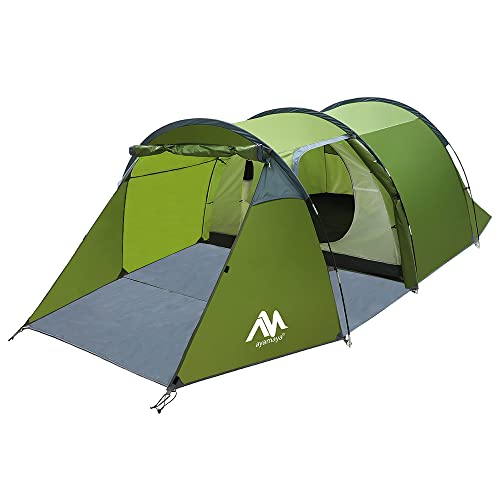
AYAMAYA 4 Person Waterproof Tunnel Tent for Camping with Vestibule Porch | 2 Divided Rooms, with Footprint & Rainfly, For Bikepacking, Motorcycle Travel, Hiking, Mountaineering
As an Amazon Associate we earn from qualifying purchases. Product prices and availability are accurate as of the date/time indicated.

CORE 12 Person Cabin Tent | Large Portable Multi Room Family Tent with Full Rainfly for Weather Protection and Storage | Included Storage Pockets for Camping Accessories


As an Amazon Associate we earn from qualifying purchases. Product prices and availability are accurate as of the date/time indicated.
Prices shown are approximate and for reference only. Prices change often, so please check the current price on Amazon before you buy.
Ratings are editorial assessments based on makers’ published vestibule area, door, capacity and weight specifications and value at typical prices. Vestibule figures vary by capacity version; check the exact size you are buying.
The Six Premium Vestibule Tents Reviewed
1. Hilleberg Parish — Best Overall
Hilleberg’s tunnel designs treat the vestibule as a working room for serious weather, poled, spacious, and built to a standard that treats a storm as a normal day. For the camper who buys once for decades, the audit ends in this row.
2. MSR Parish — Best Backpacking Two-Door
The Hubba line’s twin vestibules give each sleeper a private parish at a weight the trail forgives, with the gear-shed thinking MSR helped define. As the backpacking parish, it shares the head.
3. Big Agnes Parish — Best Awning Vestibule
Copper Spur’s vestibule doors convert to awnings, turning the front hall into a shaded porch in fair weather without extra parts. As the adaptable parish, it earns its row.
4. REI Parish — Best Basecamp Living Vestibule
The Basecamp’s large front vestibule is a genuine room for chairs, kitchen, and waiting out weather at a fixed camp. As the living parish, it holds its row.
5. Marmot Parish — Best Family Front Hall
Marmot’s family designs give the vestibule the family’s traffic and clutter, with doors and height composed for real use. As the family parish, it holds its place.
6. NEMO Parish — Best Standing Room
The Highrise line’s height extends into its vestibule parish, suiting campers who change and organise standing rather than crouching. As the standing parish, it completes the table.
Buying Guide: Inventory the Gear, Test the Shape at Home, Keep the Corridor Clear
Step One: Write Your Vestibule’s Inventory
List what your vestibule must hold on your wettest realistic night: boots per person, packs per person, outer layers, the dog, the kitchen box, and the traffic through them all. Note the camp it serves — carried on a back, which caps the whole tent’s weight, or driven to a basecamp, which frees the vestibule to be a room — and the weather it must shrug off, sheltered valley or exposed coast. Note also your party’s arrangement, couples and groups favouring a vestibule per door, families a single great hall. This inventory, measured against your actual packs and boots rather than imagined ones, decides the size parish before any brand is discussed.
Step Two: Audit Shape, Structure, and Ventilation
For each finalist, read the vestibule as a room: its area and, more importantly, its shape and height where the gear will sit; its structure, fly-only or poled, against your weather; its doors, count, operation in rain, and awning conversion where offered; its vents and their behaviour in rain; and the fly fabric, zip, and seam parish over the vestibule specifically. Compose the price whole with any footprint and the guy lines the full pitch requires. Refuse a vestibule whose area is achieved by a tapering point your packs cannot use, or whose structure your weather will fold; in this category, shape and structure are the specification, and floor area is merely their summary.
Step Three: Pitch It, Load It, Live in the Doorway
Pitch the tent at home and load the vestibule with the real inventory from step one, then rehearse the day’s movements: entering in imagined rain, sitting to lace boots, the night exit with the corridor loaded, and packing the whole tent away with its extra fabric. Adjust the organisation until the path stays clear and the drip lines fall where nothing suffers. On trips, keep the round this guide describes: food stored by the local rules and never in the vestibule, flame out of the tent and any vestibule cooking done only at the open outer edge under the maker’s guidance with ventilation wide, and the tent aired and stored loose and dry at home. A premium vestibule chosen and lived with this way repays its price every wet evening of its long life, which is the category’s whole argument.
How We Selected These Premium Vestibule Tents
We included only real, named, currently sold tents whose makers publish vestibule area, door, capacity, and weight specifications, spanning expedition, backpacking, basecamp, and family parishes where the vestibule is a designed room rather than an afterthought. Prices are typical retail ranges by capacity. Ratings weight vestibule shape, structure, and ventilation first, then doors, fabric and zip parish, liveability, and value.
Frequently Asked Questions: Premium Tents With Vestibules
How big a vestibule do two campers actually need?
Big enough for two pairs of boots, two packs, and a clear path between them, with the shape to hold those things along its length rather than in a single heap at the door. In practice, that argues for either of the two honest arrangements in this table: a modest vestibule at each of two doors, giving each camper a private parish and an exit, or one large shared vestibule of the basecamp kind where the kitchen and the dog also live. The figure to distrust is a single area number on a sharply tapering design, whose far half holds nothing wider than a shoe. Test any finalist against your real packs at home, as step three directs, and let the gear itself cast the deciding vote.
Can I cook in the vestibule?
Only with great care, at the outer edge, and under your tent maker’s guidance — and the better answer in fair weather is simply outside. The hazards are two and both are serious: flame and melting fabric, and carbon monoxide, which is colourless, odourless, and lethal in enclosed spaces. Many makers advise against vestibule cooking altogether, and that advice governs. Where severe weather leaves no choice, the stove goes at the vestibule’s open outer edge, the door stays open with ventilation wide, the cook stays awake and in attendance with a clear exit, fuel stays outside, and no stove or heater ever runs while anyone sleeps. Treat those as absolute conditions rather than tips, and let the vestibule’s storage and shelter roles, which need no such warnings, be the reason you bought it.
Is one large vestibule or two smaller ones better?
It follows the party. Two campers in a backpacking tent are usually better served by a vestibule at each door: private storage, no climbing over a partner, two exits, and a smaller sail on each side for the wind to argue with. A family or a basecamp group is usually better served by one large front vestibule composed as a hall, where the kitchen box, the dog, and the collective clutter live together and the evening’s lantern hangs. Solo campers can take either parish and should choose by weather, the poled single vestibule of the expedition rows being the strongest shelter for one person’s whole kit. The error to avoid is the compromise that serves nobody, one medium vestibule on a two-door tent whose second door opens onto bare weather and a bootless exit.
Does a bigger vestibule make the tent worse in wind and condensation?
It gives both more to work on, and premium design is precisely the management of that fact. A larger vestibule presents more area to the wind, so it needs the structure, shape, and guying this guide audits — poled or hoop support, a sloped rather than vertical face, and guys set at their proper angles — and in truly exposed country a lower, smaller design may be the wiser premium. For condensation, the larger covered parish holds more wet gear breathing moisture into still air, so vents that work in rain and a door that cracks safely are not features but necessities, and the habit of shaking and wringing gear before it comes under cover pays nightly. Chosen with those answers built in, the big vestibule is a strength in weather rather than a liability, which is the entire difference between the premium rows of this table and a cheap tent with a large flap.
Related guides
- How to Clean Backpacking Tent Floor in 2026: 6 How to Clean Backpacking Tent Floor Picks for Easy Cleaning, Odor Removal, and Reliable Tent Care
- Best Compact Tent for Small Apartments: 6 Best Compact Tent for Small Apartments Picks in 2026
- Best Tent for Dog Sledding Trips in 2026: How to Pick a Winter Tent That Keeps You and Your Dogs Safe in Snow and Wind
- How to Fix Tent With Stuck Zipper in 2026: A Complete Guide to Fixing a Stuck Tent Zipper, With 7 Repair Kits Compared
More from Amazon
Programs that pair well with the guide above. Offers and eligibility are set by Amazon and may change.
Free shipping on eligible items, Prime Video and more. Eligible new members can start with a free trial.
Start a Prime free trialAudiobooks and podcasts to listen to on the go. Eligible new members can start with a free trial.
Try Audible freeAd-free music streaming. Eligible new subscribers can start with a free trial.
Try Music Unlimited freeA free business account with business pricing and bulk-buying tools for work, shop or home office.
Create a business accountAs an Amazon Associate we earn from qualifying purchases.

Write Your Review
No reviews yet. Be the first to share your experience!