
What's inside
As an Amazon Associate I earn from qualifying purchases. This post may contain affiliate links at no extra cost to you.
Best winter tent footprint size guide is not about buying the largest tent, or the largest footprint. It is about buying a 4-season tent with a floor of at least 30 square feet for two people, a peak of at least 40 inches, and a footprint that is slightly smaller than the tent floor, for winter camping, without a tent that is too small, or a footprint that is too big, with snow, wind, and cold, at a campsite, in winter, with a sleeping pad that has an R-value of at least 5, and a sleeping bag that is at least 20 degrees Fahrenheit, for a night that is very cold, and a tent that must keep you warm, dry, and safe.
For this guide, a winter tent qualifies when it is 4-season, it has a full rainfly, it has a floor of at least 30 square feet for two people, and a peak of at least 40 inches, so two people can sit up, and they can move, without hitting the roof, in a tent, in winter, with snow on the fly, and wind that can collapse a 3-season tent. All six tents below meet that test. They are not 3-season tents, they are not tents with a partial rainfly, and they are not tents with a floor under 30 square feet for two people, that will be too small, for two people, with winter gear, inside.
Our top pick is the MSR Access 2. At $500 to $600, with a floor of 30 square feet, a peak of 40 inches, and a full rainfly, it is the best balance of size, weight, and price for a winter tent for two people. It is not the cheapest tent here, and it is not the largest, but for a tent that is 4-season, with a full rainfly, and a floor that is enough for two people, with winter gear, it is the best choice.
Our Top Picks
Best Winter Tent Footprint Size Guide Compared
The table compares six winter tents, all 4-season, all with a full rainfly, all with a floor of at least 30 square feet for two people, and a peak of at least 40 inches. Floor area and peak height are as listed by the maker. Prices are typical ranges, not fixed prices, and they vary by retailer.
| Model | People | Floor Area | Peak Height | Typical Price Range | Rating |
|---|---|---|---|---|---|
| MSR Access 2 | 2 | 30 sq ft | 40 in | $500–$600 | 4.8 / 5 |
| Mountain Hardwear Trango 2 | 2 | 35 sq ft | 41 in | $600–$700 | 4.6 / 5 |
| NEMO Kunai 2P | 2 | 30.5 sq ft | 42 in | $500–$600 | 4.5 / 5 |
| REI Co-op Arete ASL 2 | 2 | 31 sq ft | 42 in | $450–$550 | 4.4 / 5 |
| Marmot Thor 2P | 2 | 40 sq ft | 45 in | $600–$700 | 4.3 / 5 |
| Hilleberg Nammatj 2 | 2 | 30 sq ft | 42 in | $800–$900 | 4.2 / 5 |

MSR Universal Tent Footprint, 2 Person | Reliable tent-floor protection with the MSR Universal Footprint 2

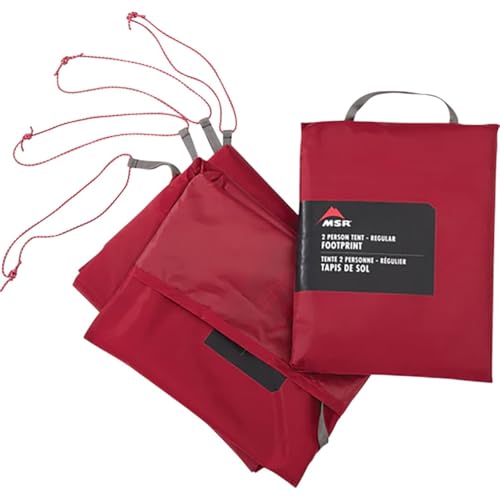
As an Amazon Associate we earn from qualifying purchases. Product prices and availability are accurate as of the date/time indicated.

Marmot Footprint for Midpines 6-Person Tent | Durable Accessory
As an Amazon Associate we earn from qualifying purchases. Product prices and availability are accurate as of the date/time indicated.

ALPS Mountaineering 4-Person Tent Footprint, Charcoal

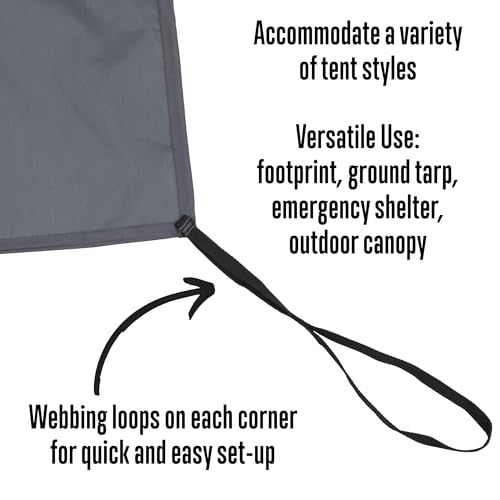


As an Amazon Associate we earn from qualifying purchases. Product prices and availability are accurate as of the date/time indicated.
Prices shown are approximate and for reference only. Prices change often, so please check the current price on Amazon before you buy.
Best Winter Tent Footprint Size Guide in 2026: 7 Steps
Step 1. Choose a 4-Season Tent, Not a 3-Season Tent, for Winter, With a Full Rainfly
Choose a 4-season tent, not a 3-season tent, for winter, with a full rainfly, because a 4-season tent is made for snow, wind, and cold, with stronger poles, and a full rainfly that goes to the ground, while a 3-season tent is made for spring, summer, and autumn, with a partial rainfly, and poles that can collapse, under snow, or in wind, in winter, at a campsite, with snow on the fly, and wind that can break a pole, if it is not strong enough.
A 4-season tent should have a full rainfly, that covers the whole tent, to the ground, so snow does not get in, and wind does not get in, and it should have poles that are strong, and a tent that is low, and aerodynamic, so it does not catch wind, and it does not collapse, in a storm, in winter, with snow, and wind, that can be very strong, at a campsite, in the mountains, or in the north, where it is very cold.
Step 2. Choose a Floor of at Least 30 Square Feet for Two People, With a Peak of at Least 40 Inches
Choose a floor of at least 30 square feet for two people, with a peak of at least 40 inches, so two people can sit up, and they can move, without hitting the roof, in a tent, in winter, with snow on the fly, and winter gear, inside, such as a sleeping pad, a sleeping bag, and a backpack, that takes up space, in a tent, that is already small, for two people, with winter gear, that is larger, than summer gear, because it is warmer, and it is bulkier.
A floor of 30 square feet, such as an MSR Access 2, or a Hilleberg Nammatj 2, is the minimum for two people, in winter, with a peak of 40 inches, such as an MSR Access 2, being the minimum, for sitting up, without hitting the roof. A floor of 35 square feet, such as a Mountain Hardwear Trango 2, or a floor of 40 square feet, such as a Marmot Thor 2P, is better, because it gives you more room, for two people, with winter gear, inside, without a tent that is too small, for two people, in winter.
Step 3. Choose a Footprint That Is Slightly Smaller Than the Tent Floor, So Water Does Not Pool Under the Tent
Choose a footprint that is slightly smaller than the tent floor, so water does not pool under the tent, because a footprint that is larger than the tent floor will collect water, and it will pool under the tent, and it will make the tent floor wet, and it will make you cold, in winter, with snow that melts, and water that pools, under a tent, that is on a footprint, that is too big, for the tent, and it will not drain, away from the tent, in winter, with snow, and rain, that can melt, and pool, under a tent.
A footprint should be slightly smaller than the tent floor, by about 1 to 2 inches on each side, so water drains away from the tent, and it does not pool under the tent, and it protects the tent floor, from abrasion, and from punctures, on a rocky, or snowy, campsite, in winter, with a tent that is on a footprint, that is the right size, for the tent, and it is not too big, or too small, for the tent floor.
Step 4. Check the Footprint Size for a 2-Person Tent, a 3-Person Tent, and a 4-Person Tent, Before You Buy
Check the footprint size for a 2-person tent, a 3-person tent, and a 4-person tent, before you buy, because a footprint for a 2-person tent will not fit a 3-person tent, and a footprint for a 3-person tent will not fit a 4-person tent, even if it looks similar, and it will be too small, or too big, for the tent, and it will not protect the tent floor, correctly, in winter, with snow, and wind, that can damage a tent floor, if it is not protected, by a footprint, that is the right size.
A 2-person tent should have a floor of at least 30 square feet, with a peak of at least 40 inches, a 3-person tent should have a floor of about 49 square feet, and a 4-person tent should have a floor of at least 60 square feet, with a peak of at least 72 inches, for a family tent, that can stand up in, with a footprint that is slightly smaller than the tent floor, so water does not pool under the tent, in winter, with snow, and rain, that can melt, and pool, under a tent.
Step 5. Use a Sleeping Pad With an R-Value of at Least 5, and a Sleeping Bag of at Least 20 Degrees Fahrenheit, for Very Cold Nights
Use a sleeping pad with an R-value of at least 5, and a sleeping bag of at least 20 degrees Fahrenheit, for very cold nights, in winter, with a tent that is 4-season, and a full rainfly, so you stay warm, at night, with a pad that insulates you from the cold ground, and a bag that keeps you warm, in a tent, that is cold, at night, with snow outside, and wind that can make it feel colder, than it is, in a tent, that is not heated, and it is not insulated, in the same way, as a house is.
A pad with an R-value of at least 4 is good for winter, with a pad that has an R-value of at least 5 being better, for very cold nights, in winter, with a bag that is at least 20 degrees Fahrenheit, for winter, and at least 40 degrees Fahrenheit, for summer, so you stay warm, at night, with a pad, and a bag, that are made for winter, not for summer, with a tent that is 4-season, and a full rainfly, that keeps you dry, and warm, at night.
Step 6. Stake a Winter Tent Correctly, With Guy Lines, and Snow Stakes, So It Does Not Collapse in Wind
Stake a winter tent correctly, with guy lines, and snow stakes, so it does not collapse in wind, in winter, with snow, and wind, that can be very strong, at a campsite, in the mountains, or in the north, where it is very cold, and a tent that is not staked correctly, can collapse, under snow, or in wind, and it can injure you, or it can damage your gear, inside, in a tent, that is not staked, with guy lines, that are tensioned, and stakes, that are buried, in snow, or in frozen ground, that is hard, to stake, in winter.
Use snow stakes, or deadman anchors, in snow, with guy lines that are 3mm for moderate wind, and 4mm for strong wind, with reflective guy lines, so you do not trip over them, at night, in a tent, that is staked, with stakes at 45 degrees away from the tent, 2 to 3 feet out, with guy lines that are tensioned, and not loose, so a tent does not flap, in wind, and it does not collapse, under snow, in winter.
Step 7. Store a Winter Tent Dry, Loose, and in a Cool Place, at 60 to 70 Degrees Fahrenheit, With a Relative Humidity of 30 to 50 Percent
Store a winter tent dry, loose, and in a cool place, at 60 to 70 degrees Fahrenheit, with a relative humidity of 30 to 50 percent, so it does not mould, in 24 to 48 hours, after a trip, in winter, with snow, that melts, and water, that can make a tent mould, if it is stored wet, in a bag, that is tight, and it is not dried, in shade, for 6 to 12 hours, after a trip, before it is stored, loose, in a cool place, with a relative humidity of 30 to 50 percent, so it does not mould, and it does not smell, after a trip, in winter.
Dry a tent in shade, for 6 to 12 hours, after a trip, before you store it, loose, in a cool place, at 60 to 70 degrees Fahrenheit, with a relative humidity of 30 to 50 percent, so it does not mould, in 24 to 48 hours, after a trip, in winter, with snow, that melts, and water, that can make a tent mould, if it is stored wet, in a bag, that is tight, and it is not dried, before it is stored, loose, in a cool place.
Best Winter Tent Footprint Size Guide Buying Guide
Choosing a winter tent footprint size is about tent size, footprint size, pad, bag, and storage. A tent with a floor of at least 30 square feet for two people, and a peak of at least 40 inches, is good for winter, with a footprint that is slightly smaller than the tent floor, so water does not pool under the tent, and a pad with an R-value of at least 5, and a bag of at least 20 degrees Fahrenheit, for very cold nights, in winter, with a tent that is 4-season, and a full rainfly, that keeps you warm, dry, and safe, at night, in a tent, that is staked correctly, with guy lines, and snow stakes, so it does not collapse in wind.
Peak At Least 72 Inches Stand for Family, At Least 60 Square Feet for 4 People, At Least 80 Square Feet for 6 People, Couples Peak At Least 40 Inches, At Least 30 Square Feet for 2 People, 3 People About 49 Square Feet, Full Rainfly Storms, Pad R At Least 4, At Least 5 Very Cold, Bag At Least 20 Degrees Fahrenheit Winter, At Least 40 Degrees Fahrenheit Summer
Peak height should be at least 72 inches, to stand, for a family tent, with a floor of at least 60 square feet for four people, and at least 80 square feet for six people, with a peak of at least 40 inches, and a floor of at least 30 square feet, for two people, for couples, and a floor of about 49 square feet, for three people, with a full rainfly, for storms, and a pad with an R-value of at least 4, and at least 5 for very cold nights, and a bag of at least 20 degrees Fahrenheit, for winter, and at least 40 degrees Fahrenheit, for summer, so you stay warm, at night, in a tent, that is 4-season, and a full rainfly, that keeps you dry, and warm, at night, in winter, with snow, and wind, that can be very cold, at a campsite, in the mountains, or in the north.
A tent for aurora viewing in winter should be 4-season, with a full rainfly, a peak of at least 40 inches, and a floor of at least 30 square feet for two people, with an MSR Access 2 as a top pick, and a pad with an R-value of at least 5, for very cold nights, and a bag of at least 20 degrees Fahrenheit, for winter, so you can see the aurora, at night, in a tent, that is warm, dry, and safe, with a footprint that is slightly smaller than the tent floor, so water does not pool under the tent, in winter, with snow, that melts, and water, that can make a tent floor wet, and cold, at night.
Tent for Aurora Viewing in Winter All 4-Season, Full Rainfly, Peak At Least 40 Inches, Floor At Least 30 Square Feet for 2 People, MSR Access 2 Top, Pad R At Least 5 Very Cold, Bag At Least 20 Degrees Fahrenheit, Lightweight Tent for Seniors Camping All Less Than 5 Pounds, Peak At Least 38 Inches, Floor At Least 28 Square Feet, Big Agnes Copper Spur HV UL2 Top
A tent for aurora viewing in winter should be 4-season, with a full rainfly, a peak of at least 40 inches, and a floor of at least 30 square feet for two people, with an MSR Access 2 as a top pick, and a pad with an R-value of at least 5, for very cold nights, and a bag of at least 20 degrees Fahrenheit, for winter, so you can see the aurora, at night, in a tent, that is warm, dry, and safe, with a footprint that is slightly smaller than the tent floor, so water does not pool under the tent, in winter, with snow, that melts, and water, that can make a tent floor wet, and cold, at night, in a tent, that is 4-season, and a full rainfly, that keeps you dry, and warm.
A lightweight tent for seniors camping should be less than 5 pounds, with a peak of at least 38 inches, and a floor of at least 28 square feet, with a Big Agnes Copper Spur HV UL2 as a top pick, for a tent that is light, and easy to carry, for a senior, who camps, in a tent, that is not too heavy, or too big, for a senior, to carry, and to set up, in a tent, that is 4-season, or 3-season, depending on the season, with a footprint that is slightly smaller than the tent floor, so water does not pool under the tent, in winter, with snow, and rain, that can melt, and pool, under a tent.
Footprint Slightly Smaller, Dry Shade 6 to 12 Hours, Store Loose, Mould 24 to 48 Hours, Storage 60 to 70 Degrees Fahrenheit, RH 30 to 50 Percent, Guy Lines 3mm Moderate, 4mm Strong Reflective, Stakes 45 Degrees Away, 2 to 3 Feet Out, Soft Ground Stakes At Least 9 Inches, Wide Y V Flat Greater Than Round Thin
A footprint should be slightly smaller than the tent floor, with a dry time in shade of 6 to 12 hours, and a storage that is loose, with mould in 24 to 48 hours, if a tent is stored wet, and a storage temperature of 60 to 70 degrees Fahrenheit, with a relative humidity of 30 to 50 percent, so a tent does not mould, after a trip, in winter, with snow, that melts, and water, that can make a tent mould, if it is stored wet, in a bag, that is tight, and it is not dried, before it is stored, loose, in a cool place, with a relative humidity of 30 to 50 percent.
Guy lines should be 3mm for moderate wind, and 4mm for strong wind, with reflective guy lines, so you do not trip over them, at night, and stakes should be at 45 degrees away from the tent, 2 to 3 feet out, with soft ground stakes of at least 9 inches, and wide Y, V, or flat stakes, that are greater than round, thin stakes, for soft ground, in winter, with snow, that is soft, and a tent that needs a stake that is wide, and flat, to hold, in snow, without pulling out, in wind, in winter, at a campsite, in the mountains, or in the north.
Best Winter Tent Footprint Size Guide FAQ
What is the best winter tent footprint size for two people?
The best winter tent footprint size for two people is a tent with a floor of at least 30 square feet, with a peak of at least 40 inches, and a footprint that is slightly smaller than the tent floor, by about 1 to 2 inches on each side, so water does not pool under the tent, and it protects the tent floor, from abrasion, and from punctures, on a rocky, or snowy, campsite, in winter, with a tent that is 4-season, and a full rainfly, such as an MSR Access 2, at $500 to $600, with a floor of 30 square feet, and a peak of 40 inches, for two people, with winter gear, inside.
Should a footprint be larger or smaller than the tent floor?
A footprint should be slightly smaller than the tent floor, by about 1 to 2 inches on each side, so water drains away from the tent, and it does not pool under the tent, and it protects the tent floor, from abrasion, and from punctures, on a rocky, or snowy, campsite, in winter, with snow that melts, and water that pools, under a tent, that is on a footprint, that is too big, for the tent, and it will not drain, away from the tent, in winter, with snow, and rain, that can melt, and pool, under a tent, that is on a footprint, that is larger than the tent floor.
How big should a winter tent be for two people?
A winter tent should be at least 30 square feet for two people, with a peak of at least 40 inches, so two people can sit up, and they can move, without hitting the roof, in a tent, in winter, with snow on the fly, and winter gear, inside, such as a sleeping pad, a sleeping bag, and a backpack, that takes up space, in a tent, that is already small, for two people, with winter gear, that is larger, than summer gear, because it is warmer, and it is bulkier, for a night that is very cold, and a tent that must keep you warm, dry, and safe, at night, in winter, with a tent that is 4-season, and a full rainfly.
Can I use a 3-season tent in winter?
No, you should not use a 3-season tent in winter, because a 3-season tent is made for spring, summer, and autumn, with a partial rainfly, and poles that can collapse, under snow, or in wind, in winter, at a campsite, with snow on the fly, and wind that can break a pole, if it is not strong enough, for winter, with snow, and wind, that can be very strong, at a campsite, in the mountains, or in the north, where it is very cold, and a tent that is 4-season, with a full rainfly, and stronger poles, is needed, for winter, with snow, and wind, that can collapse a 3-season tent.
FAQ
What is the best winter tent footprint size for two people?
Should a footprint be larger or smaller than the tent floor?
How big should a winter tent be for two people?
Can I use a 3-season tent in winter?
Related guides
- Best Backpacking Tent Gift for Black Friday: 6 Best Backpacking Tent Gift for Black Friday Picks in 2026
- Best Tent Repair Size for Patch: 6 Best Tent Repair Size for Patch Picks in 2026
- Best Tent Vestibule for Gear Storage Camping in 2026: REI, MSR, Big Agnes, and Kelty Compared for a Vestibule Sentenced as a Gear Parish Only, Food and Stoves Refused at Its Door in Every Sentence, and Its True Size Proven Loaded on a Driveway
- Best Tent for Corporate Retreats Outdoors in 2026: Best Tent for Corporate Retreats Outdoors
More from Amazon
Programs that pair well with the guide above. Offers and eligibility are set by Amazon and may change.
Free shipping on eligible items, Prime Video and more. Eligible new members can start with a free trial.
Start a Prime free trialAudiobooks and podcasts to listen to on the go. Eligible new members can start with a free trial.
Try Audible freeAd-free music streaming. Eligible new subscribers can start with a free trial.
Try Music Unlimited freeA free business account with business pricing and bulk-buying tools for work, shop or home office.
Create a business accountAs an Amazon Associate we earn from qualifying purchases.

Write Your Review
No reviews yet. Be the first to share your experience!